
 YouTube
 Apple Podcasts
 Spotify
 Amazon Music
 "The End of the Story" — Brenda (Part 2)
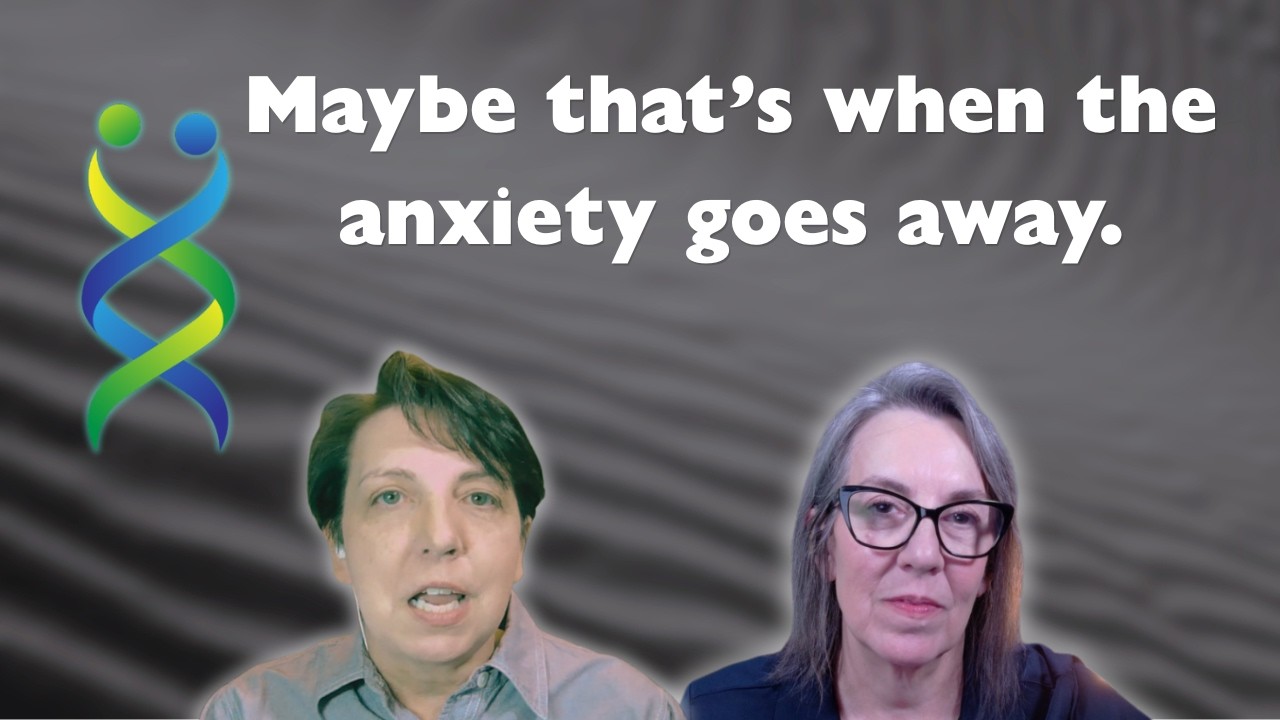
"The anxiety comes with the not knowing... When you know the end of the story, maybe that's when the anxiety goes away. I don't have as much anymore... I've jumped over every single hurdle. The last one is maybe going to be the hardest. But I'll do it and I'll finish the race." — Brenda
The medical framework treats the conclusion of active oncology protocols—the chemo infusions, the surgical steps, the daily radiation runs—as a clean finish line. But for the patient, it is simply the start of a quiet, chemical cliff.
In this conclusion of a special two-part narrative feature, titled "The End of the Story," host Dr. Randi Paynter sits down with her sister, Brenda, to document the compounding personal, financial, and structural crises that define advanced survivorship. In February 2025, Brenda completed her primary therapies and was declared to have No Evidence of Disease. She thought she was done. She wasn't.
During that same month, her husband Kevin died suddenly of a cardiac event. In this episode, Dr. Paynter contextualizes Brenda's loss through the public health lens of Caregiver Burden — analyzing the severe, documented systemic cortisol strain, sleep fragmentation, and cardiovascular risk borne by spousal caregivers navigating active medical and financial emergencies.
Grieving and isolated, Brenda's biological trajectory accelerated. Just five months later, a rapid local recurrence bypassed her primary therapies, presenting an increasingly aggressive tumor that necessitated an urgent double mastectomy, followed by a structural progression to a metastatic diagnosis.
Brenda and Dr. Paynter break down the administrative theater of specialty pharmacy billing, analyzing the predatory mechanics of "copay accumulator adjustment programs" where private insurers collect manufacturer grant funds without counting them toward a patient's out-of-pocket maximums — leaving individuals managing severe drug toxicities to handle complex financial logistics simply to maintain drug access.
Ultimately, Brenda shares an invaluable perspective on the transition from clinical anxiety to profound emotional peace, dismantling standard battle metaphors to reframe what it means to cross the final hurdle of an illness on your own terms.
In this episode, we discuss:
-- The abrupt impact of medical estrogen deprivation and sudden clinical menopause.
-- Caregiver Burden data and its impact on spousal cardiovascular health.
-- Somatic PIK3CA mutations and navigating ultra-rapid local breast cancer recurrences.
-- The logistics of surgical self-advocacy during a crisis.
-- Copay accumulator adjustment programs and financial toxicity loopholes.
-- Coming to terms with a cutaneous metastatic breast cancer diagnosis and limited prognosis statistics.
-- Why the anxiety of the unknown drops away when you accept the end of the story.
-- Go to ChangedByCancer.com for show notes and episode links
Research articles referenced:
-- Liu Z, et al., Int J Nurs Sci, 2020. https://pmc.ncbi.nlm.nih.gov/articles/PMC7644552/
Resources:
-- Want to learn more about the financial policy traps mentioned today? Check out the KFF Brief: "Copay Adjustment Programs: What Are They and What Do They Mean for Consumers?" by Michelle Long, Meghan Salaga, and Kaye Pestaina, Oct 2024. https://www.kff.org/health-costs/copay-adjustment-programs-what-are-they-and-what-do-they-mean-for-consumers/#ac2ac3a5-95af-47b7-bee7-1f9291e6ac27
-- CancerCare (free counseling and financial assistance): cancercare.org
-- The No Bull**** Guide to Dealing with Cancer: https://www.nobullguidetodealingwithcancer.com/
Changed By Cancer is hosted by Dr. Randi Paynter, a cancer epidemiologist. This podcast shares personal experiences and systemic issues in healthcare. It is not medical advice. Please consult your own medical team for health-related decisions.
Randi:
If you're just joining us, I'm Dr. Randi Paynter — host of Changed By Cancer, and Brenda's big sister.
Before we go any further, if you haven't listened to Part 1 yet, I strongly look to you to pause this episode, go back, and start there. Brenda's journey is a continuous narrative, and to understand the landscape of what we are covering today, you need to hear how she fought to get here.
The conversation you are about to hear with my sister was woven together from two distinct interviews — one recorded in mid-March, and the other one in early May. We took our time, pacing our sessions around her clinical schedule and her energy levels, to capture the true, unfolding scope of what it means to live inside an ongoing medical crisis.
As always, a quick reminder: I am a cancer epidemiologist, but I am not your clinician. The data and experiences we discuss here are deeply personal and are meant for insight and advocacy, not as medical advice.
For those who have heard Part 1, you know we left off in February of 2025. Brenda had finished radiation. She was declared No Evidence of Disease. She thought she was done.
She wasn't done.
The medical system often treats the conclusion of active treatment — the chemotherapy, the surgeries, the radiation — as a grand finale. But for a patient, the end of treatment is simply the start of a quiet, chemical cliff.
Brenda:
So when you finish treatment for cancer, the reality is you don't finish treatment. This grand finale that I had thought I was going to experience at the end of a year was, in fact, not the end. It was just phase one. Because of the nature of my cancer, it was feeding off of hormones, female hormones, estrogen and progesterone. And so part of making sure that I stayed cancer-free was removing as much of those hormones as possible from my body, which for a woman means menopause. Beyond menopause, really. Even in menopause, they give you estrogen to help some of the things that come along with it. But in my case, I was medically or clinically put into menopause, and also aided in blocking estrogen receptors in my body so that estrogen played very little role. What that meant for me was being slammed into the brick wall of all of the things that come with the menopause. Really fast. There was no gradual, I didn't get to gradually enter menopause over a few years. I got to get pushed over the cliff into menopause. That's what we call hell. That's what that experience was. Into the burning fury of hell, like, literally hot flashes, right? Or just turning bright red and going, why am I red? Why does everybody else look normal? And I'm, like, sweating and turning red. Oh, I think this is what they call a hot flash. Yeah, some of that. Just no capacity at all to control emotion. Whatever emotion was brewing in my brain, it didn't even feel like it came from my brain. Just whatever emotion was brewing in the body through chemicals and hormones. That's what came out. I could have won the lottery and I could have been crying sad tears the moment after because I couldn't control any of my emotions. I went in to get these new medications and at that time learned that I would be receiving, on a monthly basis, a shot with an extended release pellet in my stomach, and then two more shots administered at the same time, into my buttocks. And I thought, what else? What else could they possibly do to me at this point? And I just start crying. And the nurse said, are you okay? And I said, I guess I'm okay. I just can't imagine what the next thing you might tell me is, because what else could you brew up for me? Oh, life. So did that for quite a few months. Every month, one of the nurses called it my full meal deal. You're here for the full meal deal? That's right. Droppin’ trou. Liftin’ up my shirt. Let's do this. Give me my crazy shots. And they did. And eventually things did start to even out a little bit for me emotionally. I'm not going to say I felt normal. Because what was normal? What is normal anymore?
Randi:
What Brenda is describing is the brutal reality of therapeutic estrogen deprivation. In breast oncology, when a tumor is hormone-receptor positive, the clinical goal is to starve the body of estrogen to prevent any remaining micro-cells from feeding. But while natural menopause takes place over years, medical deprivation happens in an afternoon. Patients are thrown over a chemical cliff into sudden, profound depletion. This doesn't just cause hot flashes; it completely alters neurotransmitters, sleep architecture, and emotional regulation. The medical system celebrates the end of radiation, but for the patient, this is when the invisible, neuro-chemical isolation truly begins.
Brenda was two weeks away from completing her final radiation treatments. Valentine's Day, February 14th, 2025, was a Friday. She and Kevin had had a good day.
Brenda:
The next day, Saturday, just was a normal Saturday finally for us. And I like to run my errands on the weekend, and we both have hobbies that we enjoy and we often, especially for me, I run off and I just say, Brenda things, I'm doing, Brenda things. And, go do my things that I enjoy doing, whether it's going to a craft store or, you know, working in the yard or whatever it is I'm up to that day. And so we went our separate ways on Saturday. Not because of any reason than we just both had separate things that we wanted to do that day. And, then when I got home, I went to bed in a second bedroom that we had, on Saturday night, because I saw that my husband had already gone to bed. I figured he was tired, and that I had gotten home later than him, and, didn't want to disrupt him. And, also with the side effects of some of my treatment, I can be not the most pleasant bed mate, whether it be noises or getting up and down or whatever. Side effects would sometimes lead me to sleep in a separate bedroom, or my husband would get up and go to the other bedroom, and that was not an irregular pattern for us. So I came home. I went to bed on Saturday night. Kevin was already in bed. We went to sleep and had a good night's sleep. And I woke up that morning. I'm more of a night person, my husband, more of a morning person, and he would get up and take care of the pets that we have. And, I woke up and figured that he probably was up and taking care of the animals. And I, you know, I'm a little dozy when I wake up and it takes me a minute to get all my faculties working. And when I finally was ready to get up, something, the house just didn't seem right. And, I realize I thought, well, that's weird. And I thought, you know what it is? It's quiet. My house is too quiet. Because we have cats that run around and, you know, chase my husband, Doctor Dolittle, around because they love him so much. He's very much an animal person that they all gravitate to. And I would always hear the animals moving around. And my husband in the mornings. But I heard nothing on February 16th, Sunday morning. And I paused and I listened a little bit more. And again, nothing. And I thought, well, maybe Kevin has gotten up and left already. And I got up and I looked in our bedroom, our shared bedroom. I was in the guestroom and he was in bed. And I thought, well, that's odd. He usually doesn't sleep this late. And why are the animals so quiet? Not waking him up. And I had the first thought at that moment that maybe he wasn't waking up for a reason. And I looked really closely at him, and I willed him to adjust, to move, and then for his chest to just raise up. And he didn't. And I walked into the bedroom. Already knowing what was happening. But so wishing that it wasn't what I thought it was. And I turned the corner of the bed, and I saw him in the bed, peacefully sleeping on his side. But still no movement. Not any movement. And I said, “Kevin,” and I touched his arm. And his arm was cold. And I touched his leg. His leg was hard. And I knew he was gone. But it couldn't be real. We'd been preparing for a year for me to be gone. And for him to be able to move on without me. So how had this happened? I took a moment. Gathered myself. And made the phone call to 911. That my husband was not breathing. And I went downstairs. And they told me to wait for someone to arrive. And the fire department was the first to arrive. The firefighters went upstairs. There was not much noise. There was nothing that I heard them doing. I didn't hear any resuscitation. They just came back down very shortly afterward. And one of them said, we're sorry for your loss. And that's when it was real. That my husband did pass. And everything else faded away. There was nothing else. There was only him and he was gone. And anyone that’s had to go through that knows that there's, again, no way to know what the right thing to do is, or what normal is. This was wrong. It felt more wrong than anything that had happened to me in the past year. I’d had no inkling, no fear of this thing happening. Of all the worst case scenarios I had thought about all year long — involving me, involving my cancer, involving my job — losing my husband was never a thought. And time stood still for a while. And I still had to go to treatment. I did, I went to treatment the next day. I don't know why other than I had to. I had to keep the fight up. It's hard to put words to February 16th, 2025. There's not words for it. But as I had anticipated, possibly making an early exit from this existence, all of a sudden, I had to find a reason to stay a little longer because I was still here. And I'd been fighting this cancer so that I could stay here. Be with my loved ones a little longer. And fighting at this point in the journey, was the only thing I knew. I was two weeks out from finishing radiation. So I kept going and I finished. And I buried my husband. Score a point for tough life, but I'm still in the fight.
Randi:
Brenda’s instinct — that the immense stress Kevin carried, directly contributed to his sudden cardiac event — is verified by decades of epidemiologic data. In public health research, we study this through the framework of Caregiver Burden. Spousal caregivers of patients undergoing aggressive therapies experience extreme elevations in systemic cortisol, prolonged sleep fragmentation, and acute cardiovascular strain. The psychological trauma of holding a household together during an active medical and financial crisis takes an undeniable physiological toll. Kevin was not the patient listed on the clinical chart. But he was, unequivocally, a casualty of this illness.
Brenda:
And I have since learned that cancer treatment is really, really difficult on spouses and marriages, and that there are some estimates of up to 50% divorce rates that occur during or soon after one of the members of a couple has been diagnosed with cancer. And that was so surprisingly high to me, while also... Yeah, it's hard. It's hard on everyone, not just the patient. It's hard on the whole household. And being able to negotiate all of the emotions of financing and the financial hardship, all the timing for all the appointments, all the recovery time, getting everybody to switch roles just a little bit to cover the person that is usually there and doing some of those things, but is now going through a hard, difficult treatment, that's all stress. And it's not just stress for one person. And that's something that came along with cancer that I had never contemplated even at the time of the diagnosis. That it was going to be that hard. Feelings are real just as much as cancer is real. They're not wrong. They're just there. And we have to deal with them. Because if we don't, they can kill us too.
Randi:
Brenda finished her radiation on schedule in March of 2025. She was declared No Evidence of Disease. She was grieving, exhausted, and living alone in her home for the first time in many years. And because her insurance depended on it, she kept going to work.
Brenda:
But I also stayed very alert myself of what I was feeling in my body, because I knew nobody else was going to do it. Scans were not scheduled at that point, and so I would check places like I had checked before. And then I started feeling a bump in my breast again on the same side that we had had surgery and again, I had dense breast tissue. It was never very good at revealing things that were wrong. And also I just had surgery, so it was probably full of scar tissue and we didn't know what was what. So my doctor agreed to do a biopsy for me, and, with the caveat that she was pretty sure it was scar tissue. And, but she would go ahead just to put my mind at ease, which I appreciated. And when the biopsy came back, I had cancer again. She was very surprised. I was not as surprised. The reason is that I had been feeling a certain pain that I can only say I was feeling it. I can't really describe it. But it's a unique pain that I had only felt with the other tumor, and I had started to feel it again.
Randi:
It was August 2025. Just five months after her primary treatment ended. Her oncologist noted that in five years of clinical practice, she had only seen a local recurrence develop this rapidly a handful of times. Because the cancer had bypassed her primary therapies so quickly, her surgical team moved immediately. There was no waiting; the clinical mandate was an urgent, total mastectomy.
Brenda:
And I was really tired, and my body was really tired. And my cancer was still aggressive. It hadn't turned off. And although I had had clear margins after my surgery, it was also clear that there had been cancer cells that independently had left the main tumor and were still floating around in the tissue. Although they weren't tumors themselves, they were present and they had been seen. And the fact is that anyone that ever has cancer will have cancer cells in their body somewhere from that point on. And you hope and you pray and you fight to not have them grow and take on a new cancer life. But mine did. There was no more options given to me. The only option was a mastectomy. And I 100% understood that. So I did ask my surgeon, can you just take both breasts? And she said, well, let's just do one, because it will be less for your body to heal from. And then later on we can do the other. But I had no intention of going through two surgeries when I thought I could do one. And so I persisted and let her know I want one surgery, I want one and done. I don't want to come back. Don't make me come back for another surgery. And so she agreed. And I had a double mastectomy in September of 2025. So less than a year from my lumpectomy and reduction. I had my cute little new boobs for less than a year — and then they were gone.
Randi:
The surgical pathology from that double mastectomy revealed a terrifying reality. It wasn't three small localized tumors as the pre-operative imaging had estimated; it was six separate, distinct malignant clusters tracking through the tissue. In the few months since her clear margins, the cancer had shed its progesterone receptors entirely.
A genomic analysis of the tumor tissue revealed a somatic PIK3CA mutation — an aggressive genetic alteration that essentially signals the cancer pathways to completely rewrite their own biology, circumvent standard clinical blocks, and multiply at a rapid, relentless pace.
To counter this highly aggressive PIK3CA mutation post-surgery, her medical team immediately initiated advanced, targeted oral therapies designed to intercept this pathway — first Kisqali, and then Verzenio. But Brenda’s biology was caught in a dangerous clinical crossfire.
Within weeks of starting, she suffered rare, severe toxicities — first cardiac side effects that threatened her heart, and then renal complications that began impacting her kidneys. Her body, already reeling from the massive trauma of a double mastectomy, was being pushed to its absolute physiological limits. She was forced to halt the very medications meant to arrest the disease, all while navigating the administrative theater of specialty pharmacy billing.
Because in our healthcare system, surviving an advanced recurrence with cutting-edge specialty drugs requires a baseline battle with the billing department.
Brenda:
I started on a new type of medication that has shown that it might help with estrogen, estrogen-positive breast cancers. It's extremely expensive. Thankfully, my insurance company approved it. But even with the insurance for a month's supply of this medication, the company wanted nearly $6,000. And I was so taken aback by that. But it's because it's new and it's, there's no generic, and they’re the only company that provides it so they can do what they want. And, so they do provide a program of sorts. It's really a program that pays them back to themselves. The $6,000. Hard to describe, but they have it like their own little insurance company. That — or their own little grant program, where they say they're giving you the $6,000 to get the medication after the insurance payment. But this company pays the drug company that $6,000. So the main company gives it to the grant company. The grant company gives it back to the insurance company. So it's just a lot of jumping through hoops for them to pay themselves and not charge you. So they get their money back.
Randi:
What Brenda is parsing out here is a systemic shell game known as a copay accumulator adjustment program. Specialty manufacturers provide financial co-pay "grants" so patients can bypass the astronomical out-of-pocket costs of non-generic drugs. However, private insurers have implemented strict workarounds: they pocket the manufacturer’s thousands of dollars to clear the drug, but refuse to count that money toward the patient's actual annual out-of-pocket maximum.
The insurance company collects double, the pharmaceutical company protects its profit margin, and a patient managing severe heart and kidney toxicities is left handling complex logistics just to keep their medication access from being summarily denied.
With her oral targeted therapies cut short by vital organ toxicities, Brenda's team relied on close surveillance. A full-body PET scan in December of 2025 came back clear. No Evidence of Disease, once again. Brenda tentatively shared the news with her family, her friends, her coworkers. Her oncologist told her she would see her in three months for routine monitoring.
Brenda:
It was a moment of happiness, a moment of celebration. I think that moment lasted for a week. Because I had an appointment to go in and and see her. And at the end of the appointment, she asked me, do you have anything else that we need to talk about? And I said, I don't think so. And I was about to leave. And then I thought, oh, wait, yes, I did have something I was going to ask you about. I have this small red rash on my right side now. And it's been there a while, and I was just going to wait and see if it went away. But it hasn't gone away. What do you think? And she said, oh, it's likely the result of radiation, or irritation after the surgery. But she used these words: because you are you, we should probably do a biopsy. I said, that makes sense. And so I went back in the next day or two days later and had a punch biopsy on the area, which means they just took a piece, a chunk of my skin tissue and sent it to pathology. Then I went home and I looked a little closer. I hadn't been looking after my mastectomy at what I looked like. It's not really something you sit and gaze at. It's not, it's not a beauty to behold — after all of this. I was left with a lot of scars, and I wasn't spending a lot of time checking it out. But after the punch biopsy, I thought, well, I better look what all is going on here. And I started looking at my torso a little more closely, and I realized that I had red spots that crossed the front of my torso, several on my back, and even one on my arm. And I immediately thought, this isn't going to be good. I hadn't noticed it before. They were painless. But back to the Google machine. I started looking things up. And I saw pictures that looked like me. And those women had had their cancer metastasized to their skin. And a week later, I found out I was one of those women.
So my current status is I have metastatic breast cancer. It's metastasized to the skin is all we know right now. The treatment has begun. However, outcomes for the type of metastases I have in the skin aren't great. The fact of the matter is, the life expectancy of the breast cancer patients that have this type of metastases, is the numbers are limited. So it's not a great statistic, but it ranges anywhere from two months from discovery to about two years. With that said, my cancer has been doing some really funky things for the past two years and moving fast. So I am not optimistic that I will make it the full two years. The response, just like the response of the woman that did my very first mammogram, the response from medical providers when they have read the results is an eyes-down head-dropped, I'm sorry. And so I know, I know what my prospects are and are not. And I've had two years to think about it. And the shock was shocking. But coming to terms with it has gone much faster than my original diagnosis, because I've had a lot of experience with getting bad news in the past two years. So you don't see a lot of tears coming out of my eyes right now because I'm okay with me. I am sad for my family and for those who care that I might not be here for a long time. I'm grateful for the time I've had, though.
Randi:
The cancer's rapid mutation had shifted the target entirely. It was now hormone receptor-negative, growing independent of both estrogen and progesterone. However, pathology caught a faint molecular signature: it was HER2-low. A highly targeted antibody-drug conjugate called Enhertu — approved only a few years prior specifically for HER2-low metastatic cases — became her new line of systemic defense. This time, delivered as an intravenous infusion.
Brenda:
This chemo is, a whole new dish of side effects. I find it difficult. My body is tired. After two years of treatment, it's tired. And I'm tired. And the chemotherapy makes one tired and nauseated more than the originals did for me. And so the nausea medication also adds to fatigue. It's a wonder my eyes are open right now, and for about a week after my infusion, they are barely open. It's been difficult. But I'm still trying. I'll keep trying.
Randi:
Sitting in the reality of a Stage IV diagnosis, knowing the statistical window of her cutaneous metastasis, I asked Brenda why she wanted to sit down and record all of this.
Brenda:
I have a couple of reasons that I wanted to record my story. First and foremost is that if it helps anybody, then great. And I have found that cancer patients. We need to stick together because we are the only ones that really understand the emotional part of what this situation looks like. Physically, nobody completely understands. But the researchers and the doctors, they're all working on it. The naturopaths, the holistic healers, they're all working on it. And whatever path you choose, it is entirely up to you when it comes to that. But I know, in my experience, that I was looking for my cancer twin. I kept looking for the person that could really relate to me, because even though there's so many patients, not too many are having the experience that I am having. And I didn't 100% find that person, but I have found people that can relate to pieces of the story and if that's all that people can relate to in my story, that's fine. But if it's helpful, that's a purpose that gives me some purpose left in my life. The legacy for those of us that don't have kids, leaving a legacy.
Talking to other people that are experiencing it, and particularly to other patients that have had it even harder. Because what I find so far, for my experience, is that those of us that are facing the very end, do somehow develop a peace. And when I first saw that, it was unbelievable to me. I met a young man in his 30s while I was waiting for an infusion, and we were in the waiting room together. And he was with his aunt, staying with her. He had been rejected from his family way earlier in his life because of homosexuality. And after his diagnosis with brain cancer, his partner broke up with him, said he couldn't handle it. And so he was left quite alone and moved to my city to be near his aunt. And yet he had such a joy when he started talking to me, asking me about myself. And when I started learning about him, I was so overwhelmed with how okay he was with his outcome. He knew he would be doing infusions until it didn't work anymore. And that’s where I am now. And I didn't quite understand. And I did ask him, how are you okay? How are you still functioning and smiling? And he told me, I just am. I'm happy for the life I've had and that just, that didn't, that didn't get it for me. And since then, I met a woman. Again, all of these people I've met at cancer center waiting rooms. One had ovarian cancer and was facing the end, another with breast cancer, who goes through an infusion every six months where she loses her hair and then it starts growing back. And then she loses her hair again, and so every six months she's going through that, and she said, I do it for my grandkids. It's the only way I can stay for them, and I want to stay for them as long as I can. And the woman with ovarian cancer said, I'm willing to do whatever they ask me to do, but I can't control the outcome. And I’ve just come to peace with it. Everybody felt a peace. And I find that sometimes those are the only people with peace.
Those of us that are all the way to the end. And I think I was like that as well. That, the anxiety comes with the not knowing. The anxiety comes with the not knowing how the story ends and the hope and the dashed hope, and dealing with your own emotions and dealing with the people around you and their emotions. And when you know the end of the story, maybe that's when the anxiety goes away. I don't know. I don't have as much anymore, though. I've had to work for it. I am feeling more peace. Processing the rest of the ending is not as big of a deal because you're good, right? This is the bad ending. And I've thought about it because we all think about it. Because from the beginning that's what you fear. There is where the “Big C” — and everything that it carries with it — comes from, is a potential death in the end. And it happens. But I'm realizing that I did it. I've made it through to this point. I've jumped over every single hurdle. The last one is maybe going to be the hardest. But I'll do it and I'll finish the race. And everybody will have to finish the race sometime. But, it can be done and you can do it. It can be done. Whatever the outcome, you can fight the cancer and do it with success emotionally, sometimes with success physically. And it really brings out the best and the worst. And we need to talk about it more and not be hiding.
Randi:
My sister tells me that the last hurdle might be the hardest — but she’ll finish the race. I believe her. I’ve watched her finish every single one before it.
What I want you to take from Brenda’s story is not a shallow sense of inspiration. She would be the absolute first to tell you that she is not a warrior, and she is not a miracle. She is a person. A fifty-two-year-old woman living in New Mexico, working in human services, loving her dog Lucy, and texting her big sister far too late at night. She was dealt a hand that absolutely no human being should ever have to play, and she is playing it with more profound grace and terrifying honesty than I ever knew possible.
As I record this final segment today, Brenda is still receiving those Enhertu infusions. The latest restaging scans show that the medication is doing what it was designed to do — it’s holding the line and keeping the skin metastases under control for now. But with metastatic disease, there is no permanent victory. It is a month-to-month, scan-to-scan reality. She is living her life in three-week increments, navigating the side effects, and continuing to show up for work.
The system failed Brenda at nearly every juncture it could fail a human being. It told her to wait two months for a mammogram on a mass that was already Stage III cancer. It sent her collection notices and made decisions for her while she was under anesthesia and under the knife. It constructed an environment where stopping work meant losing the medical insurance that was keeping her breathing. It set up a pharmaceutical shell game where multi-billion dollar entities profit twice off a patient's out-of-pocket limits, while the patient actively fights off severe organ toxicities. And it threw a biology at her so aggressive that doing everything completely right wasn’t enough to stop it.
This is exactly why this show exists. Not to comfort you. It exists to make you angry. It exists to look at the data, to look at the human cost, and to ask: what are we going to do to change it?
Brenda — thank you. For letting me hold your story. For trusting me with it. And for a lifetime of laughs and love.
You can get show notes, links, and other information at the website, which is ChangedByCancer.com.
I encourage you to subscribe and leave a review on your platform of choice.
And I will catch you on the next episode.