
 YouTube
 Apple Podcasts
 Spotify
 Amazon Music
 “The No-Bull Truth” — Rachel
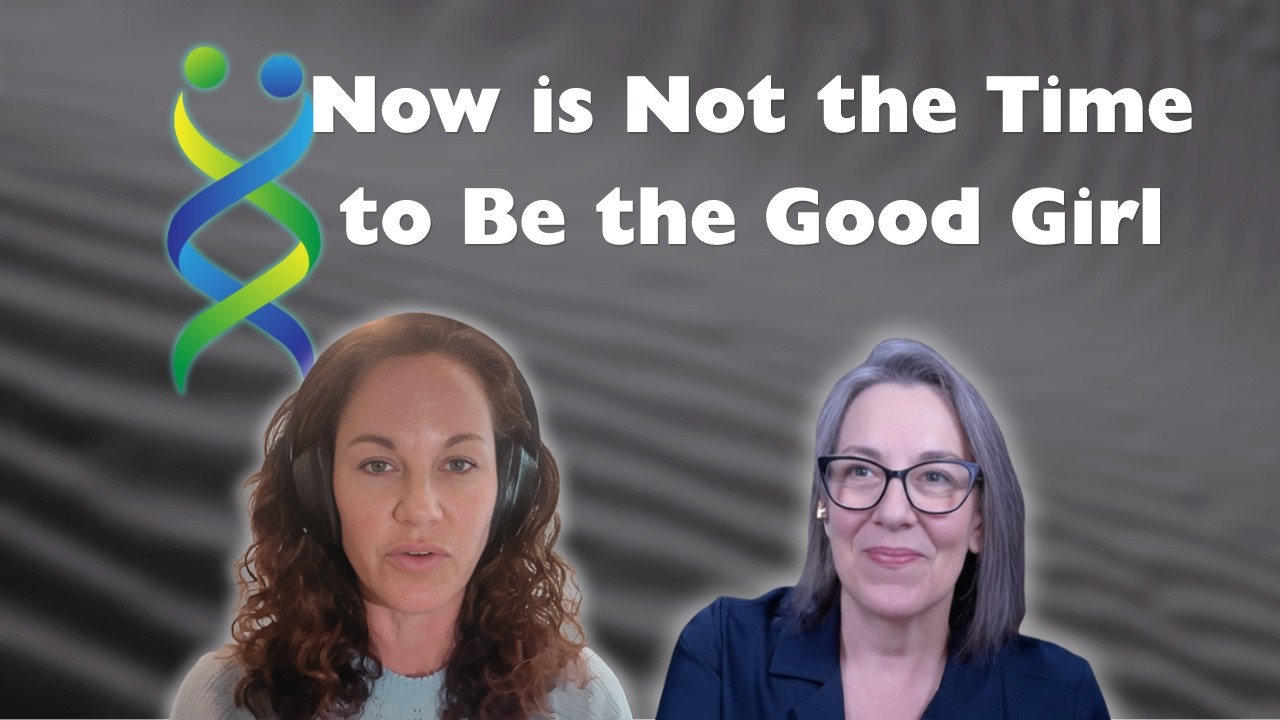
Rachel is a two-time ovarian cancer survivor, an 18-year veteran of the cancer journey, and the author of The No-Bull**** Guide to Dealing with Cancer (written with co-author Dr. Mercedes Castiel). She was 32 years old when persistent, progressing symptoms led her to an OB-GYN, an ultrasound, a CAT scan, and — three days after her first appointment at Memorial Sloan Kettering — surgery for a rare form of ovarian cancer. She went into remission, had a recurrence in 2017, and is back in remission today.
She wrote The No-Bull**** Guide because she couldn't find the book she needed when she was first diagnosed. Not a memoir. Not a cure book. A practical, honest guide to navigating every stage of the cancer journey — from the first moment something feels wrong, through diagnosis, treatment, survivorship, and remission.
In this episode, Dr. Randi Paynter and Rachel discuss:
-- Ovarian cancer symptoms — what Rachel experienced, why she delayed, and why she calls ovarian cancer "a sneak, not a killer"
-- Ring theory — the comfort in, dump out framework for the constellation of people around a patient in crisis
-- Cancer ghosting and blame — why people disappear, why patients blame themselves, and what's actually happening psychologically
-- Self-advocacy — why women in particular are conditioned to underadvocate, what the stakes are, and the story of a friend who pushed for a third biopsy and saved her own life
-- The Friday CT scan — a story about vulnerability, fear, and what happened when Rachel simply told a hospital desk clerk how terrified she was
-- Fertility — why it must be asked about immediately after diagnosis, and before treatment begins
-- Recurrence and survivorship — what 18 years of navigating cancer looks like, including a 2024 scare with co-author Dr. Castiel in the room
-- The CEO of your own care — how to build a crew, delegate effectively, and understand that the choices are always yours
More info about Rachel:
-- Book: https://www.nobullguidetodealingwithcancer.com/
Resources mentioned:
-- NCI-designated cancer centers: cancer.gov/research/infrastructure/cancer-centers/find
-- Memorial Sloan Kettering Cancer Center: mskcc.org
-- Ring theory: https://en.wikipedia.org/wiki/Ring_theory_(psychology)
-- Dr. Mercedes Castiel: https://thecancercareconcierge.com/
-- Fertility preservation: fertilehope.org
-- CancerCare (free counseling): cancercare.org
-- Go to ChangedByCancer.com for show notes and episode links
Changed By Cancer is hosted by Dr. Randi Paynter, a cancer epidemiologist. This podcast shares personal experiences and systemic issues in healthcare. It is not medical advice. Please consult your own medical team for health-related decisions.
Randi 00:00
Welcome to Changed By Cancer. I'm your host, Dr. Randi Paynter. If you are listening to us on your favorite audio platform today, you are hearing the soundtrack of a fully produced video episode.
Today, I'm sitting down with Rachel, a two-time ovarian cancer survivor and 18-year veteran of the cancer journey — and the author of The No Bull**** Guide to Dealing with Cancer, a practical, no-nonsense guide written from hard-earned lived experience.
Rachel was 32 years old when she first noticed something was wrong. Three days after walking into Memorial Sloan Kettering, she was in surgery. Eighteen years, one recurrence, and a whole lot of hard-won wisdom later, she sat down with me to share what she's learned — and what she wants every person navigating a cancer diagnosis to know.
We cover a lot of ground in this conversation: ring theory, cancer ghosting, self-advocacy, fertility, and what it really means to be the CEO of your own care. But underneath all of it is a single, clear message: you deserve to fight for your life, and this conversation will help you do that.
The full video version of this episode is available on our YouTube channel and at ChangedByCancer.com. But whether you are watching or listening, Rachel's clarity, practicality, and hard-earned wisdom come through in every word.
Before we get any further into today's story, a quick reminder: I am a cancer epidemiologist, but I am not your doctor or clinician. The conversations we have here are about personal experiences and systemic issues in healthcare; they are not medical advice. Please consult your own medical team for any health-related decisions.
Today I'm joined by Rachel, a two-time ovarian cancer survivor, an 18-year veteran of the cancer journey, and the author of The No-Bull Guide to Dealing with Cancer — a practical, honest guide written from hard-earned lived experience. Rachel, welcome. I'm so grateful you agreed to come and share your story with us.
Rachel 02:36
Well, I appreciate you, you know, hosting me, Randi, and, you know, reading my book and taking interest in this topic, because there are millions of people, 2 million new diagnoses in the United States every year, and, you know, over 20 million survivors, in the United States alone. So there can be a feeling that you're all alone when you're in the middle of experiencing this, but you definitely aren't. And the more that we can share our stories and as you said, our hard earned lessons, the hopefully, better we can equip people to navigate this journey.
Randi 03:22
When did you first get cancer and how did you find out you had cancer?
Rachel 03:29
So I have to rewind the tape to 2008, when I was 32 years old and I started experiencing symptoms. So I found my cancer because I had symptoms. Something in my body changed. Multiple things changed, and they both persisted and progressed, which is something I'll probably revisit later when we talk about what I've learned and what I would tell other people. But, I discovered that I had an ovarian cancer, a very rare form of ovarian cancer. But for those out there, I always try to give women information because I say ovarian cancer is a sneak, not a killer. It's very treatable when it's found early, but it's usually not found early because it's difficult to find. You know, to date, there aren't easy cancer markers or annual tests you can take, like you do with, say, a pap smear. In my case, I had changes to my menstrual cycle. I was also experiencing pain when I would run. I was a runner and I would have pain. Abdominal pain. I had a lot of digestive issues, like the classic bloating, you know, after you eat. And it was getting worse and worse. And then, eventually I could see it. You know, if I was laying flat in my bed, I had a little lump, like, on my belly. So it's sticking up. And I now regret the amount of time it took me to go to the doctor and check it out. I should have known better. I'm a biologist by sort of undergraduate training. I knew something was up, but I was in deep denial. And I was 32 years old. As my coauthor Dr. Mercedes Castiel would say, rare is rare. And so there's a tendency to downplay things when they would not be common. So I did eventually go see an ObGyn because I thought something is wrong. And that started the journey that day. The ultrasound showed that my ovary was basically not visible. It was subsumed by something else that had a lot of blood vessels that weren't supposed to be there. And, subsequently that day had a CAT scan and learned that I had a very large mass in the area where my right ovary was supposed to be. And, fortunately, the CAT scan showed I had no visible metastasis. So, the very beginning of a series of good news, bad news, kind of or bad news, good news, kind of, discoveries, if you will. So that was the beginning of the journey. I had not been biopsied yet. I didn't definitively know that I had cancer, but it wasn't a fibroid. It wasn't anything else that that Gyn would be familiar with. It was unknown. Massive, large size. And I thought, oh, that's not good. I ended up reaching out to a friend who had a connection at Memorial Sloan Kettering Cancer Center in New York, which I knew to be one of the leading cancer centers in the world. And I said, you know, I'm terrified. I feel like the clock is ticking. Can you help me? And so we sent, she put me in touch with somebody there. I sent my medical records. They said, indeed, you need to see us. And they got me an appointment, basically like the next day, because they were really worried. So I drove from Virginia, where I was living at the time, up to New York City, and saw the surgeon who said, we don't need more images, you need surgery right now. And they had me in surgery three days later. So, that was, whirlwind when doesn't even really begin to describe it. Post-surgery, I knew I had cancer. There's more labs that have to take place because they have to stage you for cancer or find out how advanced your cancer is, and also exactly what kind it is. But they could tell from the biopsy while I was still in surgery that it was a malignancy. So you wake up from, anesthesia and you know you have cancer. So, that was the start of what is now 18 years of journey for me. I'm very thankful to still be here.
Randi 07:57
At what point did you decide to write this book and go back and revisit that experience?
Rachel 08:04
I really only decided to write the book basically a couple of years ago. I started kind of working on bits and pieces of it, partially, because along the way, when you survive cancer, it is not uncommon for friends and family and friends of friends to subsequently approach you kind of as an expert or someone they can tap into when they have a diagnosis, or someone they know has a diagnosis, and they kind of want to know, what can I expect? What should I do? What questions should I ask? I also then had a close friend who was younger, who was exactly the age I was when I was diagnosed, who was diagnosed with a breast cancer, and I did a lot of, as much as I could of supporting her with information. And that was when I started to think, one to many. Let's write this down. And I remembered that when I first was diagnosed, I was looking for a book that would be a guidance type of book, and I really didn't find anything. That was what I was looking for. There were memoirs and the best one for me in terms of supporting me sort of emotionally and helping prepare me was Lance Armstrong's memoir, It's Not About the Bike. But memoirs are very specific to that person's cancer and experience. And I was looking for more, what the heck should I do and what can I expect? And then there were a lot of books that were very academic, or about a specific type of cancer that I didn't want to get into. And then there were the category of books I would call the cure books that I also found off-putting for me that were, hey, I did this and it cured me. You can do the same thing and you can beat cancer too, because I didn't believe that that was really the case. I think that, you know, things that you did worked out for you and that was great. But if there were really a silver bullet for cancer, we would all be using it right now. So I shied away from those as well. So when I went to write my book, I felt like I had seen every kind of book I didn't want to write. And there are handful out there that I've seen that other people produce that I think are good, that do fall into the sort of very same vein as what I'm looking for, that tell stories with the purpose of helping people understand how to navigate the journey. And that's really what I was, was trying to create. And so that's why I created the No Bull Guide to Dealing with Cancer. I was very intentional and intentional about not calling it the No Bull Guide to Beating Cancer. Surviving Cancer. And very intentional about that because no one can promise that to anyone. They can't promise that you're going to beat it. They can't promise you're going to survive it, but they can help you to deal with it. And so that was why I called it what I did. I knew that if I called it The No Bull Guide to Surviving Cancer, I would get more people buying it. More people would buy it, for sure, but I just couldn't in good conscience call it that, because it felt like clickbait. It felt like false, false hope instead of legitimate hope on how to navigate the journey.
Randi 11:15
There's so much that's useful in this book, and there were some things that I had never heard before that you taught me. One of these things is about Ring Theory. So maybe you can talk a little bit more about what that is.
Rachel 11:34
Ring theory is really useful for the constellation of people around a patient, as well as for the patient. As long as that constellation of people read the article or become aware of how this works. But the idea is that a person in crisis, that is the patient is in the center of essentially a bullseye. They're the dot in the middle, and then there's rings around them. And those rings represent the people around the patient based on their sort of closeness to them. So the first ring would be immediate family, children, parents. The second ring might be more distant family. You might put siblings there or not. You might put aunts and uncles, grandparents, their cousins. And then out from there, you're going to your closest friends, then more distant friends than things like work colleagues or acquaintances until you get out to strangers. And the fundamental idea is that if you want to help the person in crisis and the person around them, depending on how close you are, which ring you are in, there is a very simple rule of thumb -- comfort goes inward, dumping goes outward. And what that means is, if you want to provide emotional comfort and support, you provide that to those who are standing closer to the crisis than you. So if you are in the first ring and you are the parent or sibling or child of the person with cancer, then you comfort that person when you are interacting with them. Negative emotional stuff, dumping the fact that you are stressed, that this scares you, that this is awful for you too because you care about them and you don't know what's going to happen that goes outward to rings outside of you. So you take all of that emotional turmoil that you're experiencing as a result of the person being in crisis, and you make sure that that goes to people further away from the crisis, whether that is friends of yours or distant family members who are further away, friends, further away colleagues or therapists or therapists are a really good idea. And fear is just terrible when it comes to the impact it has on people's behaviors. When people are afraid, they have a tendency to behave in ways that are very unhelpful, and they often end up dumping their emotions inward on people who are closer to the crisis. For example, when I was going through chemotherapy -- like surgery and chemotherapy -- my first time around, I had no less than five people tell me about someone they knew, who they were close to, who died of cancer. And they... several of them broke down in tears and essentially sobbed in my arms about their friend or sister or whomever who died of cancer. And I thought, you realize that I'm terrified right now, right? That I have cancer, that I'm wearing a wig, that I'm taking poison every three weeks, and that I feel awful and that I'm freaking terrified. Why would you talk to me about the person who died of cancer? And I've spoken to so many cancer patients, and this happens to all of us. But it's because those people, your cancer has traumatized that person, and it's brought up feelings that they have that are really sad and uncomfortable and overwhelming, and they just essentially vomit those feelings all over you. And, you know, I don't think that they're intending to harm you, but they are. And so, ring theory is really useful because I tell people if there's a cancer diagnosis, just print out this article or send copies of it to all your family and friends. It's a super useful thing no matter what. Cancer is not the only use for this. If someone is going through a crisis, comfort in dumping out is a really good guideline for how to deal with it. So I have a whole section in the book -- small -- but I have a section in the book on essentially people behaving badly, with full empathy for why this often happens.
Randi 16:01
So can we talk a bit about cancer ghosting and about people blaming you for your cancer?
Rachel 16:10
Cancer ghosting is a very common behavior, unfortunately, and it is what it sounds like. It's a friend or family member who is close to you, just essentially disappearing when you have cancer. And for some people, like almost everybody around them ghosts them or they don't have a lot of people in their life and they end up very alone. And it can be very isolating. The reason people do it, is because your cancer is overwhelming for them, which sounds crappy. And it is. It's overwhelming for them because they don't know what to do or how to help you. It's overwhelming for them, potentially, because medical things are scary or icky. It could be overwhelming for them. And this is a big one. And this will tie back to why people blame you for your cancer. They see their own mortality. You know, you are now a living reminder that life is a roulette wheel and that you aren't guaranteed to wake up in the morning. You can get run over by a bus, you can get struck by lightning, you can get cancer. And people do not like to stare mortality in the face. And so sometimes what they do is just run away. Just like period full stop. They just run away. Some people that I've met in support groups talk about how -- and Dr. Castiel, who's my coauthor on this and has worked with many, many, many cancer patients, will say -- that the only blessing there is that, there's sort of two-fold. One is some people will show up that you never expected. And that even happened for me, like people who had been sort of acquaintances, like, showed up for me in big ways. And I was like, oh, wow. Like, thank you. Like this was a huge support to me. Emotional support or logistical support or whatever. And the other is that your true friends who stick it through with you, like, those are your true friends and you really know who they are. So that is sort of the other. If you can think of a silver lining to ghosting is you do shake out who is going to be there for you through thick and thin based on, you're going through thin and you know who's still there. Why do people blame you? Most interestingly, you are going to blame you if you are a patient. It's like I've never met anybody who doesn't blame themselves for their cancer, at least initially or to some degree. You know, you put yourself under stress. You didn't take care of yourself. You drank a lot of alcohol. You ate too much sugar. You didn't exercise enough. You tanned too much when you were a teenager. You know, you smoked cigarettes. You know, whatever it is you, you are going to think of ways that you are to blame for your cancer. And so are some of the people around you. Some of the people around you are going to blame you for your cancer too. And even if they don't think of it as like that's what they are doing, it's what they're doing. I had a relative tell me that because I was an entrepreneur and my career was so stressful, that was why I got cancer. And so, you know, why? Why would someone do that? And like the first question people always ask when they find out someone has cancer is, oh, do they smoke? Like they're immediately looking for the reason. And while we know that the number of carcinogens in cigarettes contribute to high levels of cancer, there are people who get lung cancer who never smoked a day in their lives, and there are people who smoke their entire lives and never get cancer. It's a complicated question. You know, you're really never going to know 99.9999% of the time why you got cancer. And so the blame and the blame game is entirely unuseful. You already got it. But the reason that people do it is, is because they want to create a narrative in their head where this will not happen to me. So the reason people blame you is because they are trying to find a story in which it doesn't end with them getting cancer. And, to make sense of it and to create a narrative in which the universe is predictable instead of random, and controllable instead of mostly out of your control. All of that is a psychological, knee-jerk reaction that comes from fear. And so, while it's annoying recognizing that, blaming yourself for it, I ended up at first -- I forget what I was going to call this chapter, but, I think I was going to call it something like people behaving badly, and I didn't end up calling it that. But one thing I called this idea is blame is not helpful. And that's really important. I am in no way saying that you should go out and smoke cigarettes and drink a handle of whiskey every day and and oil yourself up like we did in the 80s and lay out and bake in the sun. I am not suggesting that there is no value to trying to lead a healthy life, to avoiding known sources of carcinogenic agents like cigarettes. There is value to taking some steps to try to take care of yourself. However, that is not a guarantee that you won't get cancer. And the reality is that if you live a long enough life, most people will get an early stage of some kind of cancer, like a skin cancer or a prostate cancer, for example, in their lifetime, because the body is not perfect and it breaks down under the pressure and the entropy of living in the world under the sun with chemicals, etc. You can't escape your environment. So the idea that if you just do x, y, z, you won't get cancer. Not true. And if you already have it, blame is not helpful.
Randi 22:21
One of the big messages in your book was this idea of, now is not the time to be the good girl. Now time is of the essence, and you have to just throw all of that out the window. Can you tell us more about that?
Rachel 22:40
One of the biggest themes in the book is self-advocacy. Or if you can't self-advocate, as we discussed, find that relative that annoys the heck out of everybody because they're so persistent and make them advocate for you. Just stick them on the people that you need answers from. But, there is a real problem for women. And, I will return to that specifically. But I think there are also certain cultures, and also sometimes people who generally feel disempowered, like maybe they have less education or they are of a lower socioeconomic status where there is a tendency not to speak up for yourself, not to question the authority of a doctor, not to ask questions until you get answers, to be embarrassed that you don't understand the words that they're using. Those kinds of things. And, circling back to women, we are legitimately punished in society for advocating for ourselves. It is real that when we stand up for ourselves, we get called all kinds of awful names. You know, where bossy is probably the nicest. You can think of another B-word that comes to mind when women just, like, simply stand up for themselves. Just like or like, hey, I would like not to die. There's a really like, I read an article about a woman who had ovarian torsion that she, her ovary had twisted, which can lead to not just organ death, the death of you as a person. And she went into the E.R. and they wouldn't believe her about how much pain she was in. And they just kind of ignored her until her husband freaked out on them. And they did surgery and she almost died because they thought she was exaggerating. You know, women, they're so hysterical. I don't know why you would underestimate a woman's sense of pain. If anyone can handle pain, we can. Like it's insane that anyone would think that women have a low threshold for physical pain. We have a very high threshold for physical pain. So when a woman tells you she feels like she's dying, she's in so much pain. Like, go, put her at the front of the dang line. So yes, we need to advocate for ourselves, and you just have to. It's too bad if someone's going to think you're bossy or not like you. This is not the time. Your life is on the line. And I have a good example in the book that is heartbreaking. I was helping to support a woman who, she was a friend of a friend. And a friend came to me and said, can you help my friend? She had cancer once. She went to the cancer center, she was in remission. And now she's back in active cancer. She's a single mom. She has an 11 year old daughter. And we don't think that she's getting the support she needs at the cancer center. She's saying, could you help try to get her into Memorial, help her with figuring that out? And I said, certainly. So I started talking to her and I honestly think that at the point she was -- at that point in time, there was no saving her. I don't think that there was. I think she was too close to no options at that point, and with a very aggressive form of cancer. But we will never know. We just know that she did ultimately pass away. And when I met her and I was trying to get her into Memorial, she had to get her medical records -- a whole separate topic in the book -- sent from the cancer center she was at to Memorial Sloan-Kettering because they need her records in order to, like, admit her, get her initial appointments, etc. And she was having trouble getting the totality of records that she needed from her existing cancer center, which I know, and that's why I talk about it. It can be a pain in the behind. There's all these administrative and logistical hoops that make cancer so much harder when it shouldn't be. Time is of the essence. She has no time and she's trying to get her medical records and, like she's not getting them. And I said to her, I don't care if you have to walk into the lobby and scream, bloody freaking murder until someone hands you your records, do it. This is your life. And she just wouldn't do it. She was quiet and nice and sweet and tired and scared, and she just would not advocate for herself. And I also think that that might have played a role with her what happened with her with clinical trials where she went off of a drug because the side effects were terrible, but it wasn't clear to her when she went off the drug that she wasn't like, for whatever reason, it might not be the fault of the doctors. Maybe they explained it, she didn't understand it or whatever, but for whatever reason, she didn't understand that once she went off of that drug in the cocktail, she wasn't going to be allowed to go back on the drug. And so what had been keeping her cancer at bay was removed, and it came roaring back. And so I had these sort of two really glaring examples of a woman who, I mean, she was the sweetest thing when she went into remission the first time, she and her daughter made these, like, bracelets, and they would go into the hospital and give them to everybody. I mean, she was just a lovely, lovely person, but she was too lovely. She's an example. And like I said, I don't know if she would have made it. Anyway, I mean, aggressive cancer is aggressive cancer. And sometimes you do everything you can possibly do and it's still... your body doesn't win that battle. But it was a reminder to me of why we need to encourage women or anyone who has sort of a quiet, afraid to rock the boat. Afraid. I don't want to bother anybody. Like if these are the phrases that go through your mind, right? I don't want to be a bother. It's okay. They'll get to me. Like, if that's the kind of thing you're thinking, like delete. Hit the delete button on that and rewrite it to, I am valuable. I deserve to live, I need what I need and I'm going to get it. Like if I need someone to give me an answer, I'm going to push until I get an answer. If I need someone to take me seriously, I'm going to push until they take me seriously. My friend who had breast cancer, she found a lump. She went to a doctor. She got an ultrasound. He told her it was nothing, that it was going to be fine. It would be really tempting to just accept that answer, because you want it to be nothing. And she didn't think so. She thought something was wrong. She really believed deep in her gut that something was wrong. And she is a good self-advocate. So she went like another, like a month later to another doctor, got an ultrasound again. You know, it's fine, everything's fine. And she just didn't believe it. So like a month later and she had a cousin who had had breast cancer. That was part of the reason why she was so pushy about it. And pushy is another word they give us, right? Like, be pushy. It's good, it's good. Be a pushy, a pushy broad. You know, being a pushy broad. And so she went to a third doctor and she said, look, I need a biopsy. I've heard that. It's all fine. I don't think it's fine. I need a biopsy because I can't sleep at night. And she got a biopsy and she had cancer. So, you know, if she had listened to anyone but herself, if she had thought, well, doctors know better, doctors know better than me or, I don't want to be a bother or, I don't want them to think I'm pushy. I don't want them not to like me. Then she would have died. Like, it's not just that they won't like you. If it's cancer, it will keep growing and eventually you will die. That is the nature of it. That's why we call it a malignancy. And it's different than something that's benign. You know, there are things that are benign, like a lipoma is where you grow these fat pads and you can grow them forever, and it's not going to kill you unless it ends up in the in a wrong part of your body. But it's not going to kill you. You know, the definition of cancer is that if you let it keep growing, eventually it will take your life. And so you cannot just, put being a good girl ahead of being a living girl. Don't do that. Just don't do that. It's not more important to be good than it is to be alive. You can bring them flowers later. When I got my very first CT scan, as we had chatted about, it was a Friday and it was in the afternoon and they're not 24/7 like the emergency room. So I had the potential of not hearing back from the radiologist until Monday morning. And I was losing my mind because at this point I was pretty sure that some serious stuff was wrong, and I was afraid that I had metastatic cancer throughout my body. And this test would tell me whether that was the case or not. It was basically going to tell me, I know I'm in deep doodoo, but how deep is the doodoo, was what I needed to know. And I went up to the desk and said, when do you think the results are going to be back? And they said, well, the radiologist is going to get to it and we'll let you know. And it got to be like 5:00 at night. And I was like, oh, God. And I just went and I said, look, I'm not sure. Like I'm pretty sure that I'm in trouble here. And this CT scan, I can't wait until Monday. Like, I'm not sure I'm going to make it emotionally. If I cannot get these results tonight, I am losing my mind. Can you please, please tell me if there is some way I can get these results tonight? And lo and behold, like, 15 minutes later, they came back and they said, the radiologist said that she will get it read. And it'll probably be around 6:00, but if you can stay here, then you will have your call with her, and she will get your results tonight. And I said, absolutely, I will stay until midnight. I will sit on the floor of the building if you need me to. But, thank you. And it was really that vulnerability. And will that always work? You know, not necessarily, but I had to give it a try and not just go home and be quiet, say, oh, I guess I can't. I guess I'm just going to have to deal with this. Instead, I was like, please, please, do you understand how like, terrified I am? And it made a big difference because that CT scan came back and said I had a big mass, but it also said I did not have visible metastasis in my body. So all of a sudden I thought, well, maybe, maybe I have a chance. And going home with that in my mind, with my husband terrified as well, like there was a little window of hope before Monday would come and we would start with appointments and next steps and all of those things. An example of some of the difference in terms of the toll it would have taken on me, and maybe even timeline if I hadn't pushed, in a soft way, in a very personal, sort of raw way, to get what I needed that day. I didn't yell at them. I just said, please, can you please help me? So the sooner that you can get information, the sooner that you can start taking steps. You know, by Monday, I was already talking to my friends about, is there a way to get me into Memorial Sloan-Kettering? I had my records. They were done. They had been delivered. So I was also able to have those records sent to Memorial so that I could start the process of can you see me? Can I get an appointment? You know, what do you think? If you don't have the inclination, the personality or the energy to self-advocate, find people who will -- family, friends. You got to have somebody out there who will go up to the desk going, hey, I know you have a whole bunch of people and I have empathy for the people who work in the system. You do still sometimes have to push to get things move forward. The way that you need them move forward. And you don't have to be spicy about it, just persistent.
Randi 34:38
So one thing that we haven't talked a lot about yet on this podcast, but is a really important topic that you do bring up and discuss to some length in your book is the topic of fertility.
Rachel 34:52
Let's start with fertility because that is a super important topic and it's an important topic, for men as well. The things that we put ourselves through with surviving cancer. I mean, I happen to have a reproductive cancer, but you don't necessarily have to have a reproductive cancer to put your little germ cells, your eggs and sperm, or the organs that produce them at risk, depending on the types of chemotherapy that you do, depending on radiation, where it is in your body, surgeries like these things can sometimes put your reproductive future at risk. So if you have any, just if you have a desire to have children or if you think you might have a desire one day and you want to reserve the right to potentially have your own biological children one day, then in the very beginning you hear, I have cancer. Like, next questions after you've talked about how do we tackle the cancer? Like in that first appointment, are we looking at something that could affect my fertility? How are we going to address that? It needs to happen. That question needs to be addressed immediately. And it should really come up from your oncologist. They should be bringing that up. They should say, do you think you have interest in preserving your fertility? And like here are the things, so in my case, I didn't have time. I went from my doctor's appointment to surgery in three days, so I didn't have time to do something like IVF. Unfortunately, it was what it was. And I had to sign a document saying, if you need to take both of my ovaries, I basically signed a document that said, whatever you need to rip out of there so I can live, do it, because that was the situation that I was in. I have a very close friend who had breast cancer. She tried a cycle of IVF. It was not successful, but she did get the chance to try it. And happy ending for her. She beat her cancer. She went into remission. She was on remission medications that were suppressive for several years and came off of them, got pregnant and had a baby, and has a lovely baby girl now. So, it did work out for her. But, fertility is an important question and it needs to be asked early in case there are mitigating steps that you could take before you dive into your chemo or radiation or other things that could help preserve that, right? An option for you long term. Interestingly, thinking long term is something you do want to do. As you're weighing out these things, there is a tendency to just put your head down and focus on the very immediate future of like, get it out of me and get it out of me now. Like, whatever you got to do, cut it, burn it. I don't care. Like poison it. Get it the heck out of me. You just feel invaded by something that is killing you. And it's a terrifying feeling. But treatments have long-term implications.
Randi 37:57
So you had your first diagnosis in 2008 and then a recurrence in 2017. And then you've also mentioned that when you went back to Memorial in 2024, Dr. Castiel was in the room with you when you experienced yet another scare. Can you talk about both your recurrence and then this scare that you had in 2024?
Rachel 38:26
I had a recurrence of my cancer in 2017 when I was 41 years old. I am back in remission and have active checkups. I'm going actually for my checkup next week, my annual checkup next week. And so I'm a survivor, an 18-year survivor. By now, I've had a lot of a lot of the arc, from the very first moment of, something might be wrong all the way through to 18 years later, having had it twice and been through various steps and stages. Treatment has changed. The landscape of cancer has changed a lot over the period of time that I have been navigating this. So it does also cover the whole thing, not just diagnosis and treatment. There's kind of a lot of information and information about the hospital part of things, the medical part of things. Less so about the extension into the emotional impact, family impact, financial impact, all of those things. And also survivorship -- remission and survivorship. What does that look like? How are you impacted long after the first day that someone says the C-word to you? Two cycles ago, so 2024 I went for my usual checkup and she joined me. She offered to join me. We had gone and gotten like frozen yogurt from Bloomingdales beforehand, which I had never had. Is amazing. Shout out to the frozen yogurt at Bloomingdales. But, we did that, and we had a lovely day, and we hadn't met in person yet, so it was really great. And then she came to my appointment with me. I have another friend who usually does that, but she was out of town. And, that appointment I had a scare. After seven years, my CT scan came back and a mark that was on my pelvic bone that has been there for a while and has been growing, but very, very slowly, had gotten to a point that my oncologist was like, and also there was one other sort of new spot. Memorial very much wants to get to the bottom of things, and I appreciate that approach. They're not oh, we just cross our fingers and hope it's okay, which there's a lot more of that out there than what you'd want to think. So I like that they take the stance of let's find out. So I had an MRI that was inconclusive, and I went home. And then I went back up a week later for a biopsy. And, thank goodness there was no evidence of disease with that biopsy. But in the moment when I had that, oh, my doctor sat down and started with, wow, instead of like, all clear. It's great. I got the, oh, there's something going on here. I have Mercedes in one room with me. And she was able to help with asking some good questions. And then afterwards, she also helped allay some of my fears because we did things like, look at my labs. And she was looking at the metabolic signals like, look, obviously you still have to have your biopsy. And we don't know for sure, but these do not look like the kind of metabolic profile that you get with someone who's in the midst of active cancer. So, you're probably okay. But obviously we don't know for sure until you get the biopsy. So it was just super helpful to have someone there and underscored what she does, and what it means to have an advocate in the room who understands things, or who's on your side, or helps you ask good questions. Like all of the above.
Randi 42:01
I'd love to talk with you about how you structured the book, because how you did it is really intentional.
And I'd also like to add that this is the book that I would want if I were a cancer patient myself. And as someone who has been in that first ring around someone who has cancer, this book is super useful in letting a person know how to support a loved one, a family member with cancer, and to give you an up-close, personal view of what that person is going through. I just really appreciate how you've approached this book, thinking both of the patient and of the people that are supporting the patient.
Rachel 42:55
I wanted to make something that was practical, that was useful, and that was a guide, not, there is a memoir aspect to it because, as you said, there's narrative. I share my story primarily, but also bits and pieces of other people's stories that I have known and worked with along the way as context. It's not to tell the story of my life. It is to tell, I went through this, and here is what I learned from it, so that you can connect the dots of why someone would learn this. Or when I explain, here's my lesson learned. And maybe you flip to the end and you just go to the quick tips, my CliffsNotes. That you might say, where did you come up with this? And then you can go back and you can read the narrative story and say, oh, I see, I understand why she came to this conclusion. And the goal, because time is often of the essence with cancer is to shorten the learning curve and make it really, consumable in small bites. The chapters only being 2 or 3 pages is intentional. And so you can flip right to what you want to know. You don't have to read it from from A to Z.
Randi 44:05
Another idea that I really like in your book is about being the CEO of your own care. Can you say more about that?
Rachel 44:16
One of the big themes in my book is you're going to need help. You're going to need help, like you need a crew. It might just be you and your partner, but that's a lot on two people. It's a lot on two people. We did a lot by ourselves the first time. My husband and I. And I do not recommend that. Second time around, when I had people around me wanting to help, I was like, absolutely. I made my brother come for the surgery so that he could help take pressure off of my parents and my husband. I made my mother in law's partner the designated communicator, and we got this online site that you can communicate to a bunch of people at once because it's like a subscription. So she was the updates gal so that I didn't have to, or my husband didn't have to text like, I'm in surgery. I'm out of surgery. It's all good. It's not all good. I didn't have to do that. So she was my communications czar. I had friends that sent me care packages to prep me for the for the hospital stay, which was lovely. I had a therapist. I got a crew around me, and I was like, yep. You do this, you do this, you do this, you do this. Oh, that's nice. Thank you for that. That's kind of how I handled it the second time around. And it was so much better. It was a million times better having help. So if you think, oh, I don't want to burden people like, frickin burden them. They want to help you anyway. They're going out of their minds if they care about you. They want to use their energy to help you. So the kind of thing like figuring out which doctors are specialists in your cancer, where it's when they require like a bunch of Google research, right? Or, coordinating all those calls or helping you to figure out transportation logistics or taking care of your kids or cleaning your house or all that stuff, like all the stuff that has to happen, like employing the people around you and getting them to do those things for you, helps make all of this complicated stuff more doable so that you can so you can focus on your health and trying to get better. And, the reason that CEO is important is because at the end of the day, all of the choices, though, are yours. So that's really important. The choices are yours. I mean, if you want to delegate the choices to someone else, you’re certainly allowed to do that. But you know, that is your choice too. It is your choice if you want to hand the baton to your partner or your mother or someone else and say, I can't make the choices -- you make them, I'm not sure. I think that's fair. At the end of the day, but that's my personal bugaboo, you know, you do. You, but the choices are yours. And that's important because there may be, for some people, there may be people in your life who want to take control of those decisions or they have an opinion on what you should do, like they want you to follow one course of treatment versus another, or they want you to continue treatment when you would maybe like to stop, things like that. And that's always super hard. But it is your life. It is your body. It is your decision. So when you are, for example, I made a decision about who would be the ones to receive the information from the surgeon in my second surgery. Like, which family members were going to be the ones that the surgeon would sit down and tell them how it went. And I had some family members who weren't happy with the choices that I made about who was going to get that message, but ultimately, I pushed back and said, this is my choice. I have decided that these are the people to get the information first. You will get the information subsequently, and that's how it's going to go. And that's how it needs to be. And the people around a person with cancer, if you are listening and you are a loved one or a friend, your job is to honor that. And even if it's crushing you, like maybe they want to stop treatment. Everybody's saying they're not going to survive and treatments are hurting them, and they want to spend the time that they have left feeling better than they do right now. That's their choice. They may want to pursue a type of treatment that you don't think they should, maybe because it's going to be too hard on them, maybe because you think it's unproven, maybe whatever you think they should take option A and they want option B, your job is to be the cheerleader for them. Choosing option B in the sense that you could, it's okay to say you disagree, but then you respectfully support them in their decision and you're there for them, no matter how that goes. So that's what truly loving someone through this process requires. It ain't easy. But it is their life. So, you know, or if you are the patient, it's your life. So the decisions, you know, they're yours. You are the CEO of your life.
Randi 49:26
So Rachel, now 18 years in — what has this changed in you? What did you learn that you couldn't have learned any other way?
Rachel 49:37
I used to wander around and tell people that I learned some really important lessons from cancer, but I could have learned them in a really, like, less crappy way. Like, there had to have been a way to learn these lessons that was less crappy than the way that I had learned them. And now I've really reached a point where I don't feel that way. I don't know if I could have learned these lessons any other way. Maybe this is the way that the universe taught me these lessons. That's it. I don't and I'm just really grateful that I learned the things that I did and that I got the chance to learn them. So that's where I land is that everything that you experience along the way is part of your journey, good and bad. And the things that we experience as bad, have something to teach us. And there are many times that down the road you will take comfort in what that lesson has provided you in terms of strength or resilience or something like being able to share with other patients. Every time that I got to share things with other patients and help them be prepared or help them. Here's a really simple example. I remember telling close family member of mine who's older that you need to bring like a notebook and a pen with you when you go to the doctor's appointments and have your partner in the room with you and go with a set of questions already written down, write down all the questions in advance of your appointment. And then write stuff down in the appointment whenever you are confused or you have a question. Because this stuff is both confusing and frightening so you can go into an appointment thinking, I know exactly what I want to ask. And then like all your questions, like your brain goes blank. And she said, oh my goodness, that was so helpful. She's like, I think of myself as this very collected, calm person and sane. Yes, you get in there and they start talking and all of a sudden your brain just goes completely fuzzy. And so having the questions already written down so that I made sure I asked them and then also writing things down at the time, because you walk out of the appointment and later you're like, oh, I didn't get this answer that I wanted. So you can then call them or go through the patient portal and ask your questions. She said, that was super useful. And that's like a tiny little tactical piece of information. I feel fortunate that I get to pass that on to someone else and help make their experience easier because of that. So that's some of the gift for me and what I learned. I feel like teaching is something that it's something that I've done, and it's something that I draw a great sense of satisfaction from. So maybe because I'm good at navigating this kind of complicated stuff and then distilling it down into easy, useful things that people can understand. Like, maybe I'm the right person to have gone through this and hand it to other people. I can totally live with that.
Randi 53:10
Rachel, thank you. Thank you for being generous enough to revisit this experience, for sharing your talents, for writing this down so others don't need to figure this out all alone and reinvent the wheel. And for sharing your story with us today. The No Bull Guide to Dealing with Cancer is available, and we'll link it in the show notes. I really hope that every single person who needs it can find it.
Rachel 53:47
Thank you. Thank you. Because it's always like, feels good to like if any of this is helpful for people. And I know some of it will be because people have like some of these lessons people have told me are helpful. But if any of this is helpful for people, I just want I just want to help people if can help them. That's mission accomplished. So I really, really appreciate the opportunity to share this.
Randi 54:12
You can get show notes, links, and other information at the website, which is ChangedByCancer.com.
I encourage you to subscribe and leave a review on your platform of choice — it helps more people find us. I'll catch you on the next episode.