
 YouTube
 Apple Podcasts
 Spotify
 Amazon Music
 "Health Is Wealth" — Aiona
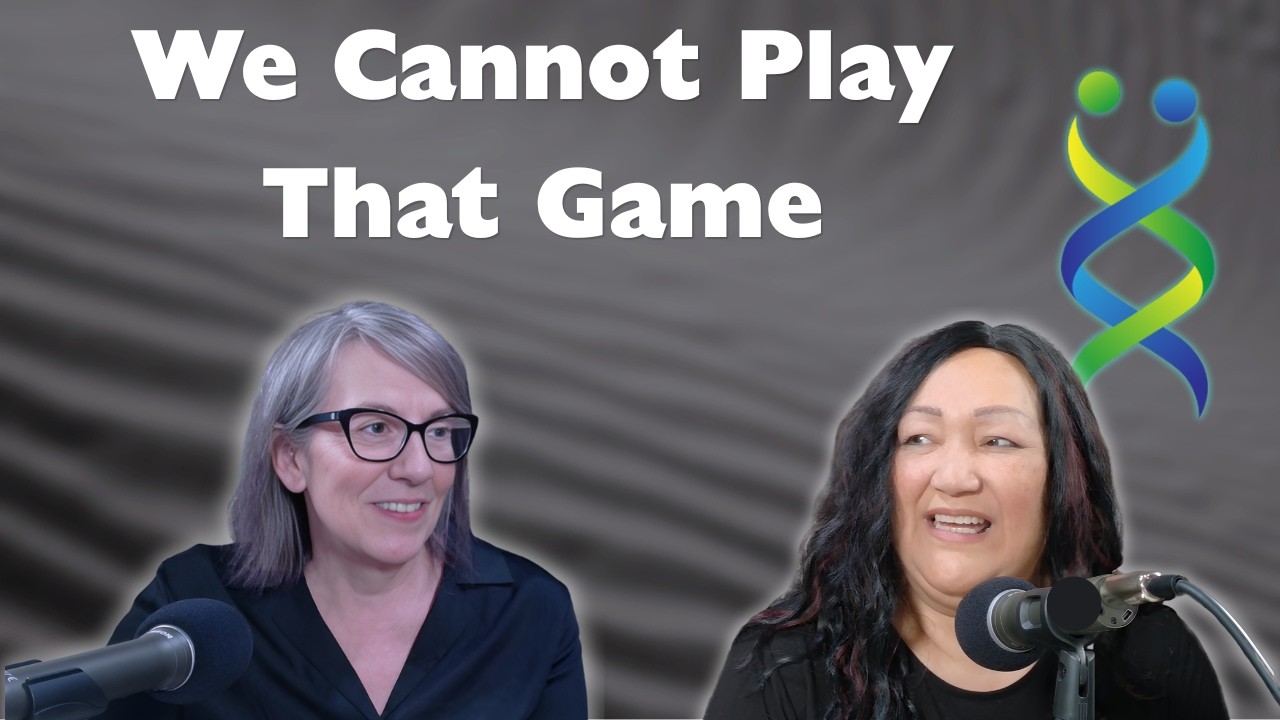
Aiona came to California from Tonga when she was about a year old. She grew up in Sacramento, went on an LDS mission at twenty-one, came home, fell in love on what was essentially a second date, and eventually landed in Petaluma, CA — managing a Hampton Inn, raising two daughters, and working twelve-hour days until the day she noticed something had changed in her breast.
That was November 2025. The biopsy confirmed it: Stage III, hormone receptor-positive, HER2-negative breast cancer — eleven centimeters across three tumors, with lymph node involvement. Her oncology team moved fast. What followed was chemotherapy, a four-day hospital stay after she collapsed, a 25% reduction in her chemotherapy dose, and one more round of chemo to go.
But the thing Aiona came on this show to talk about wasn't the treatment. It was the silence.
Growing up in a Tongan community in California, Aiona had absorbed a belief she didn't have a name for: that when someone gets cancer, there's usually something they did to deserve it. She had believed this about other people. And when she got her own diagnosis, her first instinct was to hide it from nearly everyone, because she was afraid they would believe it about her. Her oncologist shut that framework down every time it came up: we cannot play that game.
This episode is also the debut of a new Changed By Cancer feature — The Epi Edit — where Dr. Paynter steps outside the conversation to put real epidemiological data behind what you just heard. In this episode, the numbers are striking. Native Hawaiians and Pacific Islanders represent about 0.4% of the U.S. population. For decades, their cancer data was buried inside the broader "Asian American" category, masking catastrophic disparities. A 2023 study in the Journal of the National Cancer Institute found that NHPI individuals between the ages of 20 and 49 have the highest cancer death rate of any racial or ethnic group in that age range in the country — higher than white, Black, Asian, Latino, or American Indian and Alaska Native populations of the same age. The gap is not biology. It is silence, and it is distance, and it is exactly the cultural stigma Aiona just spent this episode describing.
In this episode, Aiona and Dr. Randi Paynter discuss:
-- Stage III hormone receptor-positive, HER2-negative breast cancer: what it means when your team uses the words "locally advanced" and "goal is cure" in the same sentence
-- Illness attribution: the cross-cultural psychological instinct to find a moral cause for a random biological event — and why it's especially dangerous in communities where it operates quietly
-- The data masking problem: why Pacific Islander cancer disparities remained invisible for decades inside "Asian American" aggregate statistics, and what the 2023 JNCI study revealed when the data were finally disaggregated
-- Why Aiona kept her diagnosis secret from almost everyone at first — and the cousin whose own breast cancer story helped her change course
-- Neoadjuvant chemotherapy: why oncologists treat before they operate, explained the way it finally made sense to Aiona
-- What "the Red Devil" is, what it does to someone who loves to eat, and what a four-day hospital stay changed about her treatment plan
-- The meal train Aiona's LDS congregation has run twice a week since her diagnosis — and what the clinical research says about why consistent social support isn't just kindness; it's cancer care
-- Aiona's three things she wants her Tongan community to know: health is wealth, stop the blame game, and we don't have to reinvent the wheel on cancer education
-- And what a chance encounter at a sushi buffet taught her — without her knowing it — about how to respond the day someone complimented the wig she wasn't wearing yet
Aiona is a first-generation Tongan-American, a hotel manager, a wife, and a mother of two grown daughters living in Petaluma, California. She and Dr. Paynter were LDS missionary companions in Miami, Florida in 1991, and had not been in the same room together in thirty-four years when they sat down to record this episode.
-- Go to ChangedByCancer.com for show notes and episode links
Resources:
-- TOFA (To'utupu 'oe 'Otu Felenite Association) — Pacific Islander community organization serving the greater Sacramento area: tofainc.org
-- The No Bull**** Guide to Dealing with Cancer: https://www.nobullguidetodealingwithcancer.com/
Research articles referenced:
-- Haque AT, et al., JNCI: Journal of the National Cancer Institute, 2023. https://doi.org/10.1093/jnci/djad069
Find out more:
Social support networks and breast cancer
-- Kroenke CH, Kwan ML, Neugut AI, Ergas IJ, Wright JD, Caan BJ, Hershman D, Kushi LH. Social networks, social support mechanisms, and quality of life after breast cancer diagnosis. Breast Cancer Res Treat. 2013 Jun;139(2):515-27. doi: 10.1007/s10549-013-2477-2. Epub 2013 May 9. PMID: 23657404; PMCID: PMC3906043.
Just World Hypothesis
-- Lerner, M.J. (1980). The Belief in a Just World. In: The Belief in a Just World. Perspectives in Social Psychology. Springer, Boston, MA.
Illness attribution
-- Roesch SC, Weiner B. A meta-analytic review of coping with illness: do causal attributions matter? J Psychosom Res. 2001 Apr;50(4):205-19. doi: 10.1016/s0022-3999(01)00188-x. PMID: 11369026.
Changed By Cancer is hosted by Dr. Randi Paynter, a cancer epidemiologist. This podcast shares personal experiences and systemic issues in healthcare. It is not medical advice. Please consult your own medical team for health-related decisions.
Aiona told me something in this conversation that I haven't been able to shake: that in her family, in her culture, there's an old, quiet rule for what it means when somebody gets sick — that if it happened to you, you probably did something to deserve it. She's spent the last several months trying to unlearn that rule in the middle of a stage three breast cancer diagnosis. This is her episode.
Welcome to Changed By Cancer. I'm your host, Dr. Randi Paynter. Quick reminder: I'm a cancer epidemiologist, but I am not your doctor or clinician. The conversations we have here are about personal experiences and systemic issues in healthcare — they're not medical advice. Please consult your own medical team for any health-related decisions.
Today's guest is someone I've known for over thirty years. We met as twenty-two-year-old missionary companions in Miami, Florida, back in 1991. We were companions for about five months, twenty-four hours a day. That’s the way that particular assignment works. We kept in touch across three decades and two coasts, but until we sat down to record this, we hadn't actually been in the same room together in thirty-four years. She drove down from Petaluma to the San Francisco Bay Peninsula to do this interview with me.
Her name is Aiona. She's fifty-seven. She came to California from Tonga when she was about a year old. She's a hotel manager, a wife, and a mother of two grown daughters — and several months ago, she noticed something different in her breast.
Just FYI, I have my two dogs in here. They are very curious about Aiona.
Aiona:Yeah, they're just keeping me on the straight and narrow, I guess. So in November of last year, 2025, I noticed a lump, rather large lump on one of my breasts. And so that triggered... I had been ignoring all of my boob squishing appointments because I got too busy at work, and then whatever. And then so finally, I went in and begged for, please, I really need to get my... Take a look at this. And so we did go and look at it. And then the doctors did say it does looks pretty suspicious. Rather large. So we had to go do the next step and do the -- what do they call that when they poke it? So they did a biopsy and found out yes, it was cancer -- confirmed it was cancer. And that was scary. But at least it's good that we knew. And so I don't remember all of the verbiage of what it was diagnosed as. But all I know is that it was 11cm by 4cm -- big. And they did say that it was stage three. So it's pretty advanced. And so they said we had to get pretty quickly to try something, pretty... you know, like, attack it as soon as we can. And then so I had to let my work know, you guys going to need to find someone to come and help or take over, because I'm going to need to leave because of this is going on. So within a week, they were pretty good about helping me to get, they got someone up pretty quickly in there. And so I was able to just stay home. And that's a blessing that I had worked at the company I work for for quite a while, for years. And so I had a good amount of disability that I can pull from. And that's how we're able to survive right now. But yeah, that's kind of like where we're at now. Right now. I have one more chemo to go, and then they've already set my schedule for my surgery. I've asked for a double mastectomy because it's only on one side, but I'm kind of, you know, I don't want to have to deal with it again.
Randi:So I think that you told me before that the cancer that you had, so you have a stage III breast cancer that is hormone receptor positive and HER2 negative.
Aiona:And there were a few. It wasn't just the one. There was one large one, but there's three. And they said it has gone to, some of my what are those things called?
Randi:Lymph nodes?
Aiona:Yeah, lymph nodes. So they worry that's going to jump from lymph node to something else. So that's what yeah. All this fun stuff going on. It was frustrating for me because going into it, I didn't feel sick.
Randi:I want to pause the conversation for a second and put some real context around what Aiona just said — I'm calling this the Epi Edit. It's a new thing I'm trying: short breaks where I step out of the conversation and into the data, the policy, or the clinical piece behind what you just heard. A few of you told me you liked it when I started doing this informally in Brenda's episodes, so I'm making it an ongoing feature in interviews, and I’ll also have standalone Epi Edit episodes start July 8th. For now, here's the first one.
So what Aiona's describing — eleven centimeters across multiple sites, with lymph node involvement, hormone-receptor-positive and HER2-negative — is a fairly aggressive presentation. Stage III means the disease has moved into nearby tissue or lymph nodes, but it hasn't spread to distant organs. It's locally advanced, not metastatic. That distinction is everything: it's still considered curable disease, which is part of why her team moved as fast as they did.
Aiona:That was just kind of like my thing. I was in management for a Hampton Inn in Petaluma. Just one Hampton Inn. Anyways, so, it was just work, work, work always. And then with this, you know, it was kind of fun to be like, I'm going to be off. But the thing is, though, and they already had told me, too. But you're going to be sick. I'm like, no, I'm not, I'm Tongan. I don't get sick. Yeah, I do. Yeah. The treatment is really, no fun, no bueno. But that's how we fight it. So we keep moving. I mean, it's not... With hospitality, you have to be on all the time, you know, especially because I'm in management. Like usually when you're talking to someone, they have a problem. They don't have a towel. They don't have, what. There's, you know, there's a need. And so for, usually it's easy to push away whatever problems of the day I have because they're usually not there. But in the beginning there was still a lot of 'woe is me' over I frickin' have cancer, you know what I mean? So everything would trigger. It could be anything. Someone would come up to me and say if they're upset about something else. You know, in the back of my head, I'm still try to hash this out on the brain that I do have cancer. And so them coming, you know, I can't. It was too hard to put up a facade of, Hi, how are you? What can I do for you? How can I make your day better? You know I couldn't function at work, and there's no way I could do that. Because even while I was prior to me being able to come off, I had been -- from diagnosis, I had worked like two weeks of knowing that something was up and so just not even knowing, I would be in tears for free, just like, for no dang reason, you know what I mean? Like someone comes to me, Hi, how are you? How's your day? And you know, in the back of my brain, bloody horrible. You know, in your brain, you know. And so, so I'm glad that is a blessing that I was able to take time off because they would have probably had to fire me because I wouldn't been able to be very effective in my work. It would have took a lot. I'm really happy because when I go to the infusions, I hear people saying, well, after this I have to go to work. And I'm like, you know how can you function? You know, so and I see how, they're, you know, after having their transfusion, they're going into work. I'm just like, oh my gosh, you people are so strong. I'm just a weakling. But, yeah.
Randi:I think you really hit the nail on the head there -- that it's the nature of the work, where it's really heavy in customer service and management and you're interfacing with people all day long and taking care of other people.
Aiona:And I'm not like that at work, you know what I mean? To like, I don't like to show anyone when I'm having a hard time or whatever. And so for them to just see me, like, in the back part of the office, just like crying and they're like, they had to stop what they're doing and give me a hug, like, calm me down and I'm like, no, no, no, I'm okay, I'm fine, I'm fine.
One of my daughters does work with me at my job. And so that's a tough juggle too because I don't know really how it really affects her. You know, I think she kind of hides it from me if she's feeling, you know, depressed about me being sick or whatever, and I just try to keep it moving, like it's okay. We're just, we're gonna do our treatments. We're good, we're good, we're okay. I feel sick but we're okay. My older daughter that helps me, I had her come back from school to kind of help me out. This is, you know, mommy's sorry, but right now, I don't have the resources to take care of you at school. And us here at home. So can you please come home and help take care of mommy? So she does do that. She's like my naughty nurse. Always bossing me around. Gosh. Did you take your medicine? Did you do this? Anyways. But she has shared with me that she's just afraid I'm going to die, you know? So I'm like, it's a real thing. It could happen. But hey, you know, we don't know day to day, you know, I could get run over by the stoplight or whatever. Tomorrow's really not promised. We don't, we don't know. But yeah, I know that's hard on the family. So I'm married and I have two adult kids. I probably didn't share that. But I have a 23 year old and a 22 year old. I have a one of my auntie's. My uncle married this one woman who she had really bad cancer. Like, very painful, like at the very end. It was really hard for her. Cancer is scary all over. But to have to go through that scares me. Like I'm a wimp. I can't, I can't take that much pain. This woman was strong, she was able to, you know, last for quite a while, actually. But for me, I think, I have too much time on my hands sometimes, and I try not to let my brain go there, but I'm afraid of what if. You know? What if I do go? You know when? Soon. Sooner than I think you know. So, we're getting up there in age, and I'm 57. Not that they can't go on without me, but I don't want them to have to go on without me. You know? And I know that my girls worry about that. And I'm sure my husband worries about it. And it's funny because we have conversations about it, and his whole thing is, I'm not going to get married. You know, like, dude, you don't have to not get married again. You know? But, we have those conversations, and talking about death is, we talk about it more now, and before it was just like, oh, you know, someday. But now it's kind of like any day now. You never know. You don't know what tomorrow is going to bring. Death and dying is a real thing. And so it's like, for me, both my parents are gone and, you know, like, both my grandparents are gone, too, you know, on both sides, my mom's side and my dad's side. I have one auntie left on my one of my siblings for my, my mom, she has one more sibling that's still alive. So my kids are able to have a grandma through her. And also my husband's parents. So they're able to have grandparents because they do still... As kids, and even now as adults, they ask about my mom and my dad and how are they. And so now, so they know the feeling of not having, you know, and so I, I think that their mind goes back, well, what if mom's gone? When my dad passed away I was in my 30s already. And so did my mom. So I'm still a mess over that. So I guess I, I'm fearful that they're going to have a lot to deal with, too. If whenever that happens.
Randi:Did either of your parents have cancer? Or are you the first one?
Aiona:I’m the first one in our line. One of my great aunts had it when she was like in her 60s. She was older. She got breast cancer, and she passed away from complications from that. But it was in her 60s. I think she lived to 69. That was one of my, that's on my dad's side. But, I mean, I don't have anyone in my family. I'm the first.
No one talks about it because it's almost -- and I think part of it is, I mean, I think it might be like that in all cultures, maybe not. But it always felt like, oh, she deserves it. That's why. She did something. That's why she got cancer. You know what I mean? So like, oh, no wonder she got cancer, because you know what I mean? It was like something that that person deserved. And this could be just me and my take on things, but I've heard it from aunties and uncles and just even talking amongst people that I know and love and it's like, why would you say that? And even myself, you know, I have been guilty of it. It's like, oh, that's why, you know, so it would be like, I mean, and it could be anything that they've done in their life or even like, so say if someone was like a mean spirited person, right. And they got cancer, right? So it's almost like, oh, well, that's why they got cancer, because God doesn't like that kind of, you know, I was like, no, that's not why they got cancer. And we know in our brain that's not why. But it kind of is kind of like yeah, kind of accepted, like you know people we will I've been in conversation. We laughed it off. Yeah. You're right. That's why. That's why they got it. Because. Because they're horrible or because, they were this in their life, you know what I mean? Or whatever. Whatever it was. And it's like no one, no one deserves it. No one went out trying to get it. You know? So that's something that needs to be nipped in the bud because, you know, I think... and it's just also, and that also kind of became, something in the way of me telling my own friends, because really, how do you start that conversation? Hi. I have cancer. You know, you know, the only ones that kind of knew at first that I did have... because I didn't really tell no one, I just didn't even. If people ask what I'm doing, my husband will be talking to his family and like, don't, don't please don't tell anyone. Because in my brain people will say, well, she deserved it because x, y, z. But I did reach out to like, close friends and cousins of mine that had gone through it. You know, I called one of my cousins. I was like, hey, so I understand because I didn't know, I just, I seen on Facebook that your girls, they... So one of my close cousins, she went through cancer, but she didn't really tell anyone. But her daughters made a whole, almost like a birthday thing. And they said, you know, mom survived breast cancer. So I think it was after she had her surgery because she chose to have a double mastectomy. And then they had, like, it was pink everywhere. They had little gifts that are for their mom, you know, and just kind of celebrated with her that she got through this and she's strong and all that kind of thing. So I reached out to her because I saw that and I said, hey, you know, and then kind of explained to her how I found out, and what I'm currently going through. And we just kind of had, like, a teary conversation. Excuse me. It was kind of a hard conversation about, you know, what I'm going through. And I asked her, how was it for you? And she shared with me all the things that helped her and some of the things that she heard from her own family and aunties that have gone through breast cancer like this. And we had a pretty long conversation about it. And so, that was one of the conversations that helped me kind of like, you know, better accept it, and better gird up my loins to be like, we can do this.
Randi:I want to go back and ask just a couple more questions about the whole blame thing. Because I think this is probably something that could be useful toward your overall goal that we had talked about, talking about the Pacific Islander aspect of this experience. With this idea of blame and maybe a cultural specific aspect to it. Did you find yourself not wanting to tell people because you were afraid of what might be said?
Aiona:Almost embarrassed. Almost like I did it to myself, like, you know what I mean?
Randi:And so to an extent, you were believing?
Aiona:Even, and also that that first kind of blame that you're talking about that is kind of normal where it's like, well, there's something that I did that made me get it, and I had that conversation with one of my oncologists. And then, you know, I was kind of tearful about it, like, you know, is it something that I did? Is it? And then she was like, no, we're not playing that game. We cannot play that game.
Randi:It's just because you were a very bad person, Aiona. It's just simply that.
Aiona:Shhhh, don't tell everyone. They know, they know. But I mean, she was pretty adamant about letting me know that we can't play. We can't do that blame game. Because she says, like, you know, those cells could have been injured in any hundreds of thousands different kind of ways. Like because, because even growing up like my, and it was something that my dad because he... I think he had well, he had wanted to study to be a doctor, but he didn't have the opportunity to, to go away to study for that. That's what I understand from hearing from my dad's siblings, you know, he wanted to be, and he kind of was like, he ended up being like the Google doctor, you know, but he did read up on things and like, he would read medical papers for fun. My whole life growing up, it was he was always, don't do that, it's going to cause cancer. Don't do that, it's going to cause cancer. And it was kind of always in my ear, like even sitting in front of the TV is like, we. You know how, like, kids sit like the TV's right here? Oh, no, we were not allowed. That could give you cancer. And we didn't have a microwave until like, the 90s because my dad said it's going to cause cancer. And if I wore too much makeup? What is that? It's going to cause cancer. So maybe the blame thing. And I think my dad was just trying to, like, educate us. It's normal that a lot of people have that kind of connection with it. Like I did something. It's my fault. I did it. But, I mean, having a dad that you hear that from all the time, and then... But yeah, my oncologist was super cool about that. She was like, you, you cannot do that. We don't know what it is. It's like going, it's like… This is what we know and this is what we can do to fight it. And they’re going, right now for you our goal is cure. So the medicine that we're going through, (sorry). The medicine that we are giving you is for cure. We still have, we have hope for cure. So don't, don't do the blame game. It's just going to cause you pain.
Randi:Quick Epi Edit here —
I want to sit with that for a second, because what Aiona's describing isn't exclusive to Tongan culture — versions of this phenomenon show up across most cultures. There's a name for it: illness attribution — It’s the instinct to find a moral cause for a random biological event, because a random biological event is terrifying, and a moral cause at least gives you something to do about it. It's the same psychological reflex behind ‘just-world’ thinking — the idea that bad things only happen to people who deserve them, because the alternative, that any of us could be next for no reason at all, is harder to sit with.
Aiona's oncologist had the right instinct, shutting that narrative down clinically, every time — because it doesn't just hurt the patient sitting in front of her. It's also exactly what keeps the next person from telling anyone they're sick at all.
Aiona:You know, I did what they said not to do because any time you get sick on anything, you don't want to be that -- the Google doctor. Because I am, Because I used to be that that. Okay, funny story too. And when I had my kids, my first one. I'm in pain and I'm going to see the nurse first, before you… So I'm crying my eyeballs out and I'm telling the nurse, I think I have placenta previa because my liver. Then, (I forget which, which side I was pointing at) but my liver, it hurts so bad. And, you know, the nurse, it's like, okay, honey. I can already look at her face because I'm crying, can't stop. And she's telling me, honey, your liver is over here. She points to the opposite of whatever I was at. And so it's not preeclampsia. And so, you know, by the time the doctor came, it was kind of good thing I wasn't trying to tell the doctor what I had. And I still have to bite my tongue whenever I go to the doctor. Because, I know they know better, but, you know, Google doctor. I'm the Google doctor. But I read something that cancer is actually the highest killer of Polynesian women. I mean, even like, being overweight and like, diabetes and stuff -- that's still a thing. But cancer is like, the biggest killer of Polynesian women. I don't know the percentage, but it was pretty high with, like, health things it's like totally different kind of, two different kinds of… Most Polynesians are overweight. Not all of them. Just there's a big number of us that are. And then, like, we just have different… I don't really know. Maybe it is kind of the same. You know what I mean? I don't, but I mean, like, body wise, you know what I mean?
Randi:It's just a different habitus. There's a different, like, body composition?
Aiona:Right. And so, but I found that cancer is still a pretty big -- I believe it said it was number one. It did say that, like, diabetes and being overweight, that kind of thing is also big up there. But I think it was still number one. And then because really, I forget the number of the makeup of the Polynesian, and that's with -- and they put all the Samoan, Tongans, Tahitians, Hawaiians, I think even Fijians are put together in that, too. I believe. And other islands. But I mean, I think out of the population, it's less than 2% or is a 0.02%? I don't remember the actual number, but it's like, you know, when you consider the how many millions of people in the world, we're only like, I want to say .02 percent of like the whole mankind makeup. And so that small group also is having a time with cancer. I think that's something that we need education on. And then just, and I, you know, in my Google research, I found that one of the big things that causes cancer is, I mean, just being obese, that can cause cancer. And I'm like, I never knew that.
Randi:Okay, Epi Edit time — and this one's a big one.
Aiona is more right than she even knows, and I want to give her real numbers, because this is exactly the kind of thing this show exists to dig into.
First, her math: Native Hawaiians and Pacific Islanders are usually estimated at around four-tenths of one percent of the US population — a little bigger than her guess, but she's not far off. It's a genuinely tiny population in a country of over three hundred and thirty million people.
And that's exactly the problem. For decades, federal health data lumped Native Hawaiians and Pacific Islanders in with the broader 'Asian American' category. It’s a category that includes dozens of ethnic groups with very different cancer risks, immigration histories, and access to care. When you average a Tongan woman's data in with a Japanese woman's data and a Chinese woman's data, the disparities specific to Pacific Islanders disappear into the average. Researchers call this masking.
It took until well into this decade before the federal mortality data were reliably separated out for this population. And once they were, the picture was stark: a 2023 study in the Journal of the National Cancer Institute found that Native Hawaiians and Pacific Islanders between the ages of twenty and forty-nine have the highest cancer death rate of any racial or ethnic group in that age range in the entire country — higher than white, Black, Asian, Latino, or American Indian and Alaska Native populations of the same age.
And here's the part that's specific to Aiona: breast cancer — not lung cancer, which is the leading cancer killer for many other Asian American subgroups — is the leading cause of cancer death for Samoan, Guamanian, and Filipino women. And five-year survival for breast cancer specifically among Tongan women has been measured at somewhere around seventy-two to seventy-four percent. For white women, it's ninety-three percent. That gap is not biology. Aiona's tumor type — hormone-receptor-positive, HER2-negative — usually has a good prognosis. The disease isn't inherently more lethal in Tongan women. What's different is how late it's typically caught, how far people have to travel for specialists, how little material exists in the appropriate language, and exactly the kind of community silence Aiona has been describing to me.
She asked, in this conversation, for someone to bring cancer education into Pacific Islander community spaces the way her own community already brings in education about diabetes, citizenship, and politics. The data back up exactly why that matters.
Aiona:I do. Whenever I look at my sources, I do see where is it coming from, because I'm, you know… I did a little IT certificate when the kids were little, and the big thing that they, you know, it's funny because we had a class on “the internet.” One thing that stuck in my brain was when you are doing your research and make sure it is a good thing. So even things like I learned from that, like when you go to Google, if you put Google-dot-edu, then you'll get all the things that are from college sources and universities and science-based kind of things. So know where you're going because sometimes you can get a random… Google will pull it up, but it could be a quack or whatever. Something that's, you know, not doing it -- maybe not so much. So with using the interwebs, try to be careful because I still remember when we had no interwebs!
Randi:Have you been offered any sort of counseling, group therapy, emotional support? Have you taken them up on that?
Aiona:I haven't, I just didn't follow through with them. Because they did tell me about like other online like groups or even some in person groups that you can go to and whatever. And I'm like, I'm more private. I mean, I don't want to be like, I already cry all the time anyways, and I don’t want to cry in front of strangers, you know? So I'm kind of private on that kind of thing. So I didn't think it would help me, so I didn't take them up on that, on that part of it. But, they did also say that there is also, like, mental health help that they can offer. And I may ask them more about that too. And they said, I think even for the family as well, not just for me. They did, in the beginning, try to get me a navigator, you know, to navigate through all the things that I might have questions on. And then I just never got back to her because like, I was kind of bombarded with all of the different appointments and they all kind of like… So I just kind of had to make a calendar and figure out all that. On my first group of treatments, I forget the name of that drug, but they call that one the Red Devil. Whatever it was, that one was every other week, but it was… That was horrible. I just couldn't eat. And that -- for someone who loves to eat -- that's like torture. Because everything you do eat just tastes like cardboard. It’s like, what’s the point? And then it makes you feel sick and then all the things that we hear about around cancer treatment. So, I was so horrible and like, sick to my stomach and in bed all the time that my husband was like, well, maybe you just need -- just tell them you don't want it anymore. Just tell them. Just go straight to the… Can they just go straight to the surgery? And I didn't want to be the Google doctor. So I'm like, we'll just keep with the plan and I'll just have to cry in bed more, and you know what I mean? So, the one thing that came to a head was when I ended up fainting at the hotel. And then they had to take me in, and I actually ended up in the -- I went to the emergency room, and I ended up in the hospital for like four days. So they're going, oh, okay, I guess I was really sick then. So that changed the plan a little bit. So they had took one treatment off and then the rest, for the second, the Taxol that I had, they took it down 25% so that I can, you know, take it better. You know, I think I was going to ask you -- because of the order they put it in, you know, it was like, the chemo and then surgery and then, I mean, why don't they just go surgery and just cut?
Randi:So my understanding, and of course I'm not an oncologist. But so my understanding of why they do that -- so they call the chemotherapy “neoadjuvant therapy.” You might have heard them use the term. So what they want to do is they want to shrink the tumor down, but they also want to deactivate it. So when they found it, it was presumably in a kind of an active, growing state. It's trying to spread. It's trying to do its thing. It’s active.
Aiona:That's right. Yeah. Because they don't want it to go other places. Right. I remember.
Randi:And so what they want to do is -- and this is why chemo makes you feel so lousy -- is that chemo is targeted to the active dividing cells.
Aiona:So your hair, your nails, okay.
Randi:Your gut lining. And the fast growing cancer cells. So what they're targeting is those fast growing cancer cells.
Aiona:But it also gets the other stuff.
Randi:And the hair, the nails are the by-products. And so that's what they're targeting. And they're really trying to kill off and deactivate as much of that tumor as they can. And, trying to just say, yeah, not today, tumor, before they go in there and take out as much as they can. So it's not just a mass thing. It's like a chemical, deactivation thing as well. And then with the radiation, it's going in and trying to clean up the area of anything that they didn't get with the surgery.
Aiona:They did explain all that well to me. But I think after going through my crybaby stage with, you know, the not still feeling well, the thought was, like my husband was like, would just tell them to just take it out now, and I forgot about that. Because they did kind of explain we're trying to deactivate as much as we can to kind of keep it here. Okay. I remember now.
Randi:Well you know, they're basically kind of bringing you to the edge of death almost with chemo.
Aiona:Feels like it.
Randi:Yeah. You feel lousy because they're starving your cells, right. Because they're trying to starve off that cancer. You're feeling really lousy by design.
Aiona:Because I have heard where they say, you know, to get the bad cells, the good cells, unfortunately, have to go, too. So I've understood that about cancer treatment. But I was like, I didn't really understand what they meant. Until now.
Randi:Well, it's probably really simplistic. I probably don't have it entirely right.
Aiona:No, that that that makes my brain get it. Okay. Thanks doctors.
Randi:Well, and it's the best approach that Western medicine has up to this point, right? Hopefully somewhere down the road they'll have something more targeted. And there are targeted therapies, but it's the best way that they can drop this nuclear bomb on this very active tumor.
Aiona:Our congregation here, they really came together to make us feel loved and make us know that they're there for us. Like, just the other day, one of the Relief Society sisters, she came with a big old, she just showed up and had a big old thing of flowers. We just thought you might like this. And I was crying at the front door. And they've gone and had this meal train. But they've been doing that since from when this all began with us. And they do it twice. They do it like on a Wednesday and a Friday because they've talked with us. What's best for you guys? And I said, Wednesday and Friday is probably the best day because we know we're always home. Monday, Tuesday, we're gone to treatment. And so, how many months has it been now? And I've even called and talked to the Relief Society president. She's the one over the women group. So, it's been so long now, and we're going to be going through this all the way till July. And I said, so maybe, we could just… it's I don't want to be a burden to the ward family and whatever. And she just, the Relief Society president was just, okay. I'll talk to the bishop about it, because he's really adamant about we really need to keep a pulse on you guys and just make sure that we're loving on you and everything. And I'm just, like, crying ugly on the phone. So until July, every Wednesday and Friday, they're going to be bringing stuff over. And I'm just like, I feel so bad.
Randi:It's really nice to have a community that has come through for you when your closest family is a couple of hours away.
Aiona:Yep. Not near. And they spend money too. Because sometimes they'll do take out and bring it over and then some of the takeout that they bring -- I'm like, this is barbecue from down the street. We only go there on payday, you know? So like I'm like looking at -- they don't give us a receipt or anything -- but I'm like, going, you know, this is like a $200 meal. Like, they spent their own money. I’m sitting there crying and eating my barbecue ribs. It was like, what's wrong with you? And I'm like, you didn't have to do this much. I totally was a crybaby. This is too much. So it's funny how food just makes you feel loved on.
Randi:One more Epi Edit —
I want to put a number on what Aiona just described, because we talked about the opposite of this with my sister Brenda a few episodes back — what happens when a patient's network goes quiet. The research on this side of it is just as strong: cancer patients with consistent, active social support have measurably better outcomes — lower rates of recurrence, better treatment adherence, and even improved survival, independent of the medicine itself. It's not just emotional comfort. A meal train isn't just a meal train. Structurally, it's protecting someone's ability to actually follow their treatment plan, keep her appointments, and not white-knuckle this completely alone. What Aiona's congregation is doing for her, twice a week, month after month — that's not just a nice gesture on the side of her cancer care. Clinically speaking, it is integral to her cancer care.
Aiona:Everyone has a pretty good sense of humor about what we're going through. We know it's serious, but I think levity does help it. And then a little kindness does help it, too. And I know they give me grace because sometimes I'm just [mouthing words] at home. I'm just like, no patience. I'd be doing like the -- what's the Meryl Streep when she's on -- Have you seen The Devil Wears Prada? Yeah. Like when she's like, pissed that no one's got ready, and is like, Why are they not ready? I mean, she does this kind of singsong hella pissed kind of thing. And I've been doing that at home, and they just look at me like, calm down, Meryl Streep. But I mean, they point out to me and I point out to them when I'm being patient.
I think everyone needs to know because it's hard to know the words to comfort someone or to, you know. I would never know what. I have never talked to anyone prior to getting this diagnosis, anyone that had have cancer before. I wouldn't go reach out to them. You know what, I'll tell you a story. So one of these ladies in a ward when I went to the Liahona Ward -- was attending the Liahona Ward -- as a young mom. And there was another young mom there, and we were in youth together, and we were in primary together, you know, leadership. And, we had found out she had cancer. I mean, I didn't know. I found out later on that she cancer. And then I remember, I thought, what can I do for them? What can I… And I had this great idea, what I can do for them -- I can get a little certificate for them to spend time to go to mani-pedi and whatever. And so, but I never followed through and I never did it. And then she passed away. And she was a young mom, and she had young kids too, right? You know, life has gone on with that family, but always it brought me to tears that I didn't do anything or I didn't say anything to be of comfort to that family while they were still on Earth. And I think it's, just do it. Whatever little thing you're doing, and even how like how the leadership came over with just flowers randomly. I mean, that so made my day. But even though I did say, when y'all gave me flowers? (Staring at my husband.) But it's a small act. Or maybe it wasn't a small act because it was gorgeous flowers. But, I mean, to learn to be a comfort to someone else specifically with cancer, because I think for me, I kind of shied away. I don't want to be a bother to them, and I don't want to, you know. Be a bother! You know, we love -- for me, I’m speaking for me -- I love when people just drop by and randomly, How are you doing? They let me talk for hours because I'm not used to having anyone to talk to. So just like our conversation right now, we go all over the world and back you know. When they would leave, I'm like, that was cool. I talked to someone besides yelling at my own family and being ungrateful for all the great things they're doing for me. But I think that's what I would want to share is to just to say, it doesn't have to be a grand gesture, you know. Because I've had somebody just come over with some little shakes that they made because they found out that I like smoothies. Dropped off a bunch of frozen ones. And then as I need them just defrost them. And, I mean, that's something super small, you know. Actually, it was probably expensive, but I mean, it doesn't have to be a grand gesture -- $300 worth of mani-pedi. It’s just, I love you, and let me know anything you need. That's all that needs to be, I think, when someone's going through something as Earth changing as this. Because I didn't think… I mean, I didn't know anything about her cancer and what went on with her, but it seems she went so fast, you know. I remember also because I didn't know she was going through it. I had seen her –- Sacramento’s small -- so you know, everyone knows where all the buffets were. So we went to a sushi buffet. And she was there. And her hair is like, kind of like, no it wasn’t nicer than mine, but it's super curly. And then she had on it seemed like longer hair and it was kind of straighter. And I figured it out way after. Later on, I found she was sick. It must have been a wig. And I was like, girl, what did you do with your hair? I love your hair. And I don't know if she thought I was trying to be silly with her, like trying to tease her about it. Whatever. But she was just, oh, I was just trying something new. And I was like, love it! It looks cute. And then so recently, someone had said that to me -- oh, I love your hair, girl. I'm like, oh, trying something new. You know, I just kind of like, she helped me often -- thank you. Lots of education in that, and I think just a lot of love.
Randi:What are the three biggest things that you've taken away from this experience?
Aiona:I think the number one thing is that health is wealth, right? First and foremost. And, from my understanding, what I've noticed my whole life, I think I can -- I'm a card-carrying Tongan -- is that we kind of take it for granted. Eating crazy is almost a joke to us. Who cares? We are strong people, like physically big and strong people. So we almost take it for granted that the health is our wealth. Do you know what I mean? I think that's number one. Number two, I don't know which one of them -- another one -- is like the blame game and like the, she got this because, you know, she got that because whatever. She didn't pass and that's what was coming to her. The Lord's letting her know all of her wrongs that she did. And that could be just a me thing that I… you know what I mean? That I’ve… but I feel like I've heard it in conversations. You know, it's not correct. But, I mean, I think it's just a mean-spirited thing that we really should get away with. And I think it's just hard because we're not educated on anything about cancer or what it is or what causes it or whatever. The third one is it's still the education piece, where, what can we do to lessen this thing? Cancer. You know what I mean? What can we do to be proactive in lessening cancer? You know, we have to know what the fight is. Like, I didn't know just being obese --that's a big contribution to you might be getting cancer. And maybe people do do it, but I don't know of any like, community groups that talk specifically about -- Polynesian community groups -- that talk specifically about cancer only, you know what I mean? There are a lot of, I know of one that I've been involved with before -- Tofa of Sacramento. You know, they kind of try to touch everything from politics to diabetes to getting education on getting your citizenship. I'm sure there are other groups that are doing the good work. And I was surprised how many different things are and then that offer education. And I think, we don't have to reinvent the wheel on this.
It's just reach out to these groups that know how to do that and invite them into our Polynesian groups. And even church congregations that already exist, and then, you have to kind of bring it in that way. It's a lot of work because I've, you know, in my work with Tofa of Sacramento, it's like, I've always done really small kinds of stuff with them.
But, I mean, it's a lot of work, it's going to have to be someone has to head it up, and then really, bring that in because it's an important piece for our people to not joke around with our lives.
Randi:That's our episode title, and it's Aiona's phrase, not mine: Health Is Wealth.
A few numbers before we go, because I promised real ones in this one. Native Hawaiians and Pacific Islanders are about four-tenths of one percent of the US population, and until very recently, the data that would have shown their cancer risk was buried inside a much bigger 'Asian American' category that didn't reflect their reality at all. Breast cancer is the leading cause of cancer death for Samoan, Guamanian, and Filipino women. Tongan women specifically survive breast cancer at meaningfully lower rates than white women — not because the disease behaves differently, but because of exactly the gaps in education, access, and community conversation that Aiona just spent this episode describing to me.
She didn't come on this show to get sympathy. She came on to ask her own community, directly, to stop treating a cancer diagnosis like a verdict on someone's character, and to start treating it like the solvable, survivable, and deeply common medical event that it actually is.
Aiona — thank you for trusting me with this, after thirty-four years of not being in the same room. I love you, and I'm so grateful to be able to partner with you to share this message.
You can find show notes, sources, and links at ChangedByCancer.com. And if this is the first time you're hearing the term 'the Epi Edit' — that's a new feature of this show. There will also be standalone episodes where I go deeper into the epidemiology, the policy, and the data behind what you hear from our guests. The first two standalone episodes of The Epi Edit drop July 8th. Subscribe, leave a review, and I'll catch you on the next episode.