
 YouTube
 Apple Podcasts
 Spotify
 Amazon Music
 “Changed by Caregiving: The Hidden Backbone of Cancer Care” — Charlotte Bayala
When someone receives a cancer diagnosis, the impact is never confined to the individual patient. It sends an immediate shockwave through an entire family, transforming spouses, partners, parents, and children overnight into primary advocates, home clinicians, and logistical anchors.
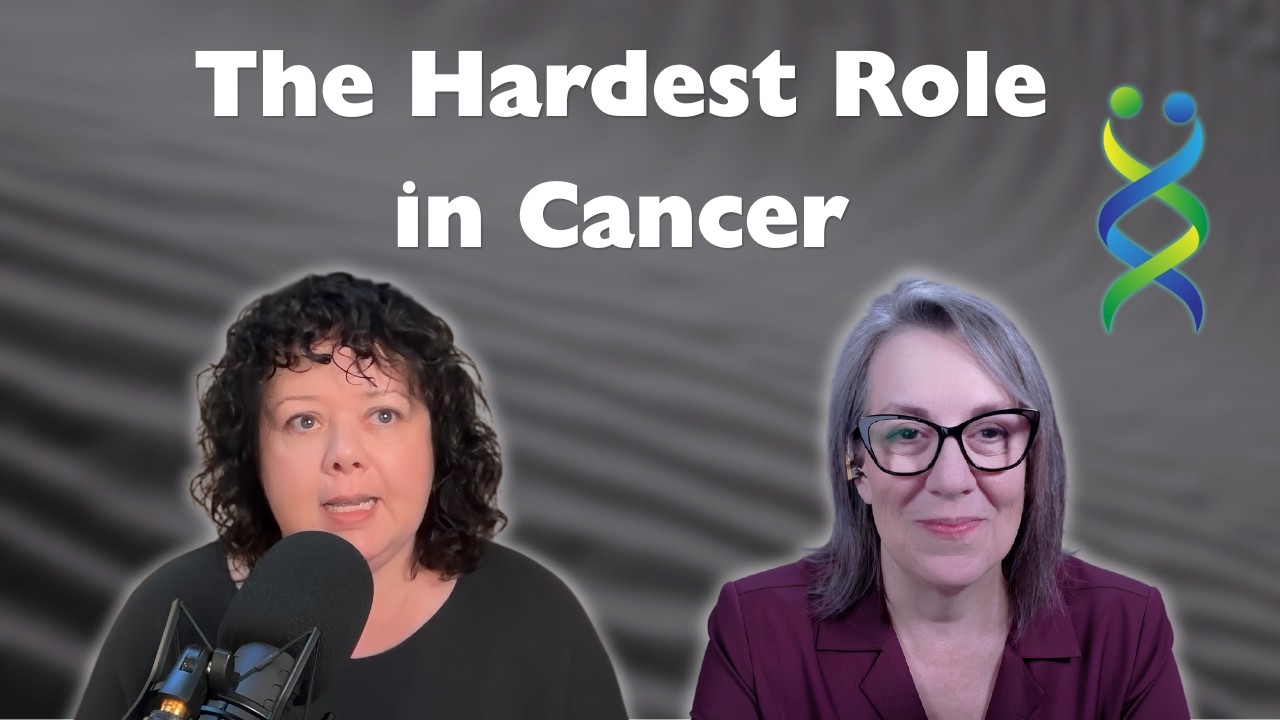
In this episode of Changed By Cancer, host Dr. Randi Paynter sits down with Charlotte Bayala, host of The Cancer Caregiver and Caregiver Breathing Room. For nearly fourteen years, Charlotte has walked beside her husband through an aggressive, incurable variant of papillary thyroid cancer — navigating nine surgeries, major anatomical complications, and repeated relocations between academic cancer centers.
Charlotte pulls back the curtain on the invisible labor of informal caregiving, how our medical infrastructure takes family care for granted, and what it truly looks like to establish boundaries, protect your children, and reclaim your own identity and nervous system.
In This Episode:
• The Ecosystem of Cancer
• Diagnosis Day: Facing Tall Cell Variant Thyroid Cancer
• The Epi Edit: Aggressive Histologies & Radioactive Iodine Resistance
• 14 Years, 9 Surgeries & The Persistence of Patient Advocacy
• Creating Family Containers: Shielding Children & Gatekeeping
• The Epi Edit: Psychoneuroimmunology & The Physical Toll of Caregiving
• Founding The Cancer Caregiver & Moving Beyond Empty Catchphrases
• The Epi Edit: The $600 Billion Economic Reality of Unpaid Care
• Immediate Clinical Reforms: How Healthcare Can Support Caregivers
Connect with Charlotte Bayala:
• Website: https://www.charlottebayala.com/
• Listen to The Cancer Caregiver: https://www.cancercaregiverpodcast.com
• Listen to Caregiver Breathing Room: https://www.charlottebayala.com/caregiver-breathing-room
• Connect with Charlotte on Instagram: https://www.instagram.com/cancercaregiverpodcast/
• Connect with Charlotte on YouTube: https://www.youtube.com/@cancercaregiver
• Connect with Charlotte on LinkedIn: https://www.linkedin.com/in/charlottebayala/
Resources:
1. Caregiver Advocacy & Practical Support
• Family Caregiver Alliance (FCA) / National Center on Caregiving https://www.caregiver.org/
Offers state-by-state caregiver resource locators, practical skill sheets (e.g., wound care and managing medications at home), and webinars focused on family dynamics and boundary setting.
• Cancer Support Community (CSC) – Caregiver Helpline & Registry https://www.cancersupportcommunity.org/
Provides a dedicated, toll-free helpline (888-793-9355) staffed by oncology social workers, alongside free virtual support groups specifically for family caregivers.
• Triage Cancer – Caregiver Legal & Financial Toolkit https://triagecancer.org/
A national nonprofit offering practical guides on navigating employment rights (FMLA, ADA accommodations), disability insurance, medical leave, and healthcare appeals for caregivers.
2. Disease-Specific Clinical Resources (Thyroid Cancer)
• ThyCa: Thyroid Cancer Survivors’ Association https://thyca.org/
A global non-profit providing support groups, education, and specialist-reviewed materials specifically covering advanced, persistent, and radioactive iodine-refractory thyroid cancer variants.
• American Thyroid Association (ATA) – Clinical Management Guidelines https://www.thyroid.org/
Publicly accessible patient and family education brochures detailing the behavior, monitoring pathways, and targeted therapies for aggressive thyroid histologies.
3. Epidemiologic Research, Health Policy & Economics
• AARP Public Policy Institute – Valuing the Invaluable Report Series https://www.aarp.org/pri/departments/ppi/
The landmark economic analysis mapping the $600 billion national economic contribution and out-of-pocket costs borne by informal family caregivers.
• National Cancer Institute (NCI) – Informal Caregivers in Cancer Care (PDQ®) https://www.cancer.gov/about-cancer/coping/family-friends/family-caregivers-pdq
Comprehensive, evidence-based clinical summaries reviewing the psychoneuroimmunology, distress prevalence, and biological morbidity associated with oncology caregiving.
• Memorial Sloan Kettering (MSK) – Talking with Children About Cancer Program https://www.mskcc.org/experience/patient-support/counseling/talking-with-children
Clinical guidelines and parenting resources designed to help families navigate boundaries, communication, and age-appropriate support when a parent is living with cancer.
For More Information:
• Full clinical citations, research references, and transcripts: https://ChangedByCancer.com
• Watch full video episodes on YouTube: https://www.youtube.com/@ChangedByCancer
Disclaimer: Dr. Randi Paynter is a cancer epidemiologist, not a medical clinician. Conversations on this show explore personal experiences and systemic issues in healthcare; they are not intended as individual medical advice. Consult your personal care team for all health-related decisions.
RANDI:
Welcome to Changed By Cancer. I'm your host, Dr. Randi Paynter. I'm a cancer epidemiologist, which means that by training and trade, I spend the majority of my working life analyzing data, evaluating population cohorts, tracking survival curves, looking at incidence trends, and dissecting biomarkers. But as anyone who has ever lived in a household touched by this disease knows, cancer does not happen in a sterile vacuum. It never impacts just the biological being who receives the diagnosis. A diagnosis is an earthquake that instantly fractures and reshapes an entire human ecosystem. It completely upends daily family rhythms, alters domestic roles, and transforms spouses, partners, parents, and adult children overnight into primary advocates, wound care nurses, medication administrators, and logistics managers. Today marks a vital, groundbreaking milestone for this podcast, our very first episode dedicated entirely to the caregiver's perspective. My guest today is someone who has navigated this challenging terrain with incredible grace, grit, and fierce intentionality for nearly a decade and a half. Her name is Charlotte Bayala. Almost 14 years ago, her husband was diagnosed with an aggressive, incurable variant of papillary thyroid cancer. Over the course of 14 years, nine major surgeries, severe anatomical nerve complications, and multiple cross-country relocations between major academic cancer centers, Charlotte has walked every single step of this chronic, high-stakes oncologic journey beside him. When she realized that our healthcare delivery models routinely take informal caregivers for granted, treating them as invisible fixtures in the exam room while offering virtually zero structured support, she took her background as a professional yoga and meditation educator and built the sanctuary she couldn't find herself, creating the podcast “Love Your Caregiving Life,” which is now known as “The Cancer Caregiver,” to support caregivers across the globe. Before we begin, a standard and essential reminder. I'm a cancer epidemiologist, but I'm not your doctor or clinician. The conversations we share on this podcast explore personal lived experiences and systemic issues across healthcare. They do not constitute individual medical advice. Please consult your own medical care team for any personal health-related decisions. Here is my conversation with Charlotte. Charlotte, thank you so much for joining me today. I'm so grateful that you agreed to come on the show. You've been so generous with your time, your comments, your approach. And as I mentioned, you are the very first guest on Changed by Cancer who is sharing the caregiver perspective and someone who hasn't had cancer herself, but who has been profoundly impacted by caring for a loved one with cancer and who's turned that experience into a resource to support and help other caregivers who are navigating this journey. So to start off, I'd love to go back to the very beginning. To the extent that you feel comfortable, can you take us back to when this cancer first entered your family's life? What was life like for you? What was going on? And how did that initial diagnosis unfold?
CHARLOTTE:
My husband was diagnosed with papillary thyroid cancer almost 14 years ago. It has a tall cell variant. He will have it for forever. There's no cure. There's no way to remove all of it. And so at the moment, he's just on treatments that help keep things from growing as much as possible. When he was diagnosed, we were a young family. My daughter was in first grade. I was working as a full-time yoga and meditation teacher. And, you know, we were just like living the life, thinking that the problems that we had then were big problems until this kind of popped in and took over. It was about 2013. He had this huge lump show up in his neck. It was in between Christmas and New Year's. So we went to urgent care and the doctor handed him steroids and said, "Yeah, take this and see how it goes." And I remember we got home in between him getting the steroids and us getting home. Like, I just felt like this protective anger. And I said, "You're not taking that medicine." I think it was like a Sunday. He said, "Tomorrow, you're going to reach out to the doctor and we're going to figure out what this is." So kind of like in my gut, I was like, "This is not, this isn't right. This is not a normal let's-just-take-a-medication thing." And that very quickly led to his biopsy. And within a month, he ended up having surgery.
RANDI:
You told me that your husband was 40 at his initial diagnosis. Was there any family history of this type of cancer or did he have any predisposing risk factors or environmental exposures that doctors identified?
CHARLOTTE:
No. I mean, good or bad, there were no definite reasons why he ended up having this cancer. There's no cancer in his family. There were no exposures to anything or any place that would have made it make sense.
RANDI:
And at that point, you had your daughter, who was about six or seven?
CHARLOTTE:
Mm-hmm. Yep, we have one daughter. She was in first grade, so she was going on seven, so fairly young.
RANDI:
And what was that initial prognosis and treatment plan laid out by the surgical and oncology teams? When you go into the doctor's office and hear that word, what did they tell you about the seriousness of what you were facing, and what were the immediate decision points?
CHARLOTTE:
When he was first diagnosed, and they had done the biopsies and was sent to an oncologist – back then, because when you've been in the world with a specific cancer, you can kind of see the maturity of the, what they think the next set of treatments should be, and that always changes after all the doctors have gotten together, and they change the standard of care. But back then, he had a total thyroidectomy. They even had to remove a lot of the lymph nodes on the right side because they had already become matted with the cancer. And so because of that and realizing that it had spread outside of the thyroid, in the beginning, there was a lot of talk about the five years, and getting always some kind of different percentage or probability of the five-year mark. And for us, that was really unsettling because that started to put us into this place where we were wondering, "Well, are you saying... Like, what does that percentage mean, and how do I live with that?" Right? Like, put it in language that we could understand. And I feel like the doctors that he had in the very beginning were really good, and they were very aggressive at doing the things that needed to be done. But then after that, he had surgery. Then he had radioactive iodine treatment, as a lot of people do. And I think they felt like that would be enough. But since he has a more aggressive form of the cancer, it didn't remove everything. And so after that, it was basically treating him with an aggressive amount of levothyroxine to just try to keep everything at bay, so that things that are s- like the thyroid hormones that were still in his body were suppressed, which has its own set of symptoms and side effects. And then we moved not too long after that. We were in Wisconsin first. We moved to Minnesota, had to change his care to a different doctor, and since we were close to Mayo Clinic, we got a doctor there. And so in Mayo, they started removing – like, if there was a… they would start to watch the tumors, and then as they were watching them, they would wait until they were basically big enough for them to grab and go in and take them out. And so that was basically how he was treated, until about 2022. And at that point, we were at Northwestern because we had moved to Illinois. And that is when there was that – There seems to have been a big shift in how thyroid cancer was treated. And immunotherapy treatments were now FDA-approved, and I think they just realized that the risk is, is less with the treatments than going in and picking things out one by one. So, um, he – that's what they started him on. And it was, again, kind of a... We were so used to them seeing something and removing it that at that point, my husband was like, "Well, just take it out. Like, why are we – What are we waiting for?" And I think it's just, you know, there's so many different layers of a person's body, right? And then every time you go into especially the area of the chest, there's scar tissue that's left behind. And then, if you really need to do something more involved, that creates a more complex surgery. So, yeah. So he – Th-there now we're in just watching everything. And at this point, they are paying attention to the medication that he's taking and have basically been stable.
RANDI:
I want to pause our conversation for a moment to put some essential epidemiological and clinical context around what Charlotte just laid out, an Epi Edit. In public discourse and even among some clinicians, thyroid cancer is often casually labeled as an easy or ‘good’ cancer. That misconception comes from high-level aggregate statistics. Papillary thyroid carcinoma accounts for roughly 80 to 85% of all thyroid malignancies. And when we look at broad national cancer registries, the aggregate five-year relative survival rate exceeds 98%. However, epidemiologists know that aggregate statistics can completely mask high-risk biological realities. Charlotte's husband was diagnosed with the tall cell variant of papillary thyroid carcinoma. Pathologically, the tall cell variant is a much more aggressive histological subtype. It has a significantly higher tendency to invade surrounding tissues in the neck, become matted in the lymph nodes, and spread beyond the thyroid bed. Crucially, tall cell tumors frequently lose their ability to absorb iodine. In standard thyroid cancer care, radioactive iodine ablation is used after surgery to seek out and destroy any remaining microscopic cancer cells. But when a tumor is radioactive iodine refractory, that frontline cleanup treatment simply doesn't work. When that happens, the clinical path permanently shifts. The disease can no longer be resolved in a single curative window. It transforms into an active, lifelong chronic condition that requires high-dose thyroid hormone suppression, repeated surgical resections, and modern targeted drug therapies. That permanent shift from an acute curable illness to an ongoing incurable condition fundamentally changes the emotional, physical, and logistical burden placed on the family caregiver. Thanks so much for explaining all of that, Charlotte. This is a clinical trajectory that many people outside of oncology don't fully appreciate. Because this tumor was iodine refractory and locally aggressive, your husband had to undergo repeated surgical debulking. How many surgeries has he had over the course of these 14 years?
CHARLOTTE:
He's had about nine surgeries. One of them required a sternotomy, so now he's had that done. One of the surgeries, they either severed or disturbed a phrenic nerve so much that his left diaphragm stopped working, so now he had had to have that plicated. When people are able to live with cancer, it's not just, "Oh, you get to live." You know, for him, multiple surgeries, different side effects, different complications from the surgeries, and then side effects from treatments, it's not the same as having a chronic disease that you just take a medication for, right? There's so much more involved, especially since thyroid cancer just lives in your lymphatic system. So the risk is that it moves further down into your body. They find it in different places. A lot of times for people who are living long-term with it, the fear is that it sets up in bones or in your spine or in your brain. So it can have free will to basically transport itself in many different places, and so that's why with him especially, they were able to really be aggressive with suppressing the hormone in the very beginning, but still things were growing throughout all that time.
RANDI:
You've mentioned receiving treatment in several different locations. What led to moving around so much, and how did relocating between different markets affect his care, if at all?
CHARLOTTE:
My husband, um, is in sales for a big company, and so every move has just been to a different market. So he's had three different oncologists. We currently don't live in the state that his oncologist is in. He flies in to see him. So that's a monthly thing where he'll fly in to have scans and blood work and his appointment. But, the care usually felt like a step up. Everyone in Wisconsin were – they were wonderful. But then when we moved over to Mayo, things were... Testing and scans were all right there. In Wisconsin, you know, if he – One time he had to have a full body MRI, and the doctor made it seem like it was timely for him to get it, but then when I tried to schedule, they're like, "Well, that'll be in a month at best." And I remember saying, "No, he needs it now." And they said, "We only have one of these in the entire state, so you're going to have to wait." And in that case, I didn't wait. I just said, "When do you know if there's cancellations during the day?" And they said, "Usually when we open the office." So I called every morning at eight o'clock and just ended up always being the same person. And I would just call and say, "Hey, I'm just checking to see if there's any cancellations for a full body MRI." After the second day, she already knew who I was, and so she would already have the answer. And by the end of the week, I remember it was a Friday, and she said, "Good luck. We have a cancellation for Monday. He needs to come in at this time." And I was like, "Thank goodness." And she said, "You know what? I just have to say, if I'm ever sick, I hope the person that helps me through it is as persistent as you are." And I was like, it wasn't even me trying to be good at what I was doing. It was because I refused to accept that he was going to have to wait a month for it.
RANDI:
That persistence is extraordinary. And then what happened when you moved to Minnesota and transitioned to the Mayo Clinic?
CHARLOTTE:
In Mayo, we would have everything scheduled on the same day, all the scans, all the blood work, the doctor's appointment. And oftentimes by the time we needed to see the oncologist at the end of the day, the CT and the CT especially, and definitely the lab work, were already – they've already been looked at and uploaded so that they could look at it. We were in Minnesota for six years. The first four and a half years were beautiful because the doctor that he had was an important part of the department. But then when they retired, they shifted everyone as they could to the doctors that were available. And it was the last year and a half where I just remember thinking this we – I'm going to have to figure out how to change and without their... There's – for me, there is a worry that there is going to be – definitely there is an ego problem with the doctor that we had been switched to. And like we were told at one point, "You just need to trust that I know what I'm talking about and not ask so many questions." Like, that is the... And so – that was a good day for me to have my mask on my face because what... Yeah. And then, we started going back and forth, but not like actually like just the way medical professionals are able to say things, but in between the lines, like you know what they're really saying. And then I answered back in a specific way that was not confrontational, but also con-… And I remember we left the appointment, and we were halfway down the hall, and my husband said, "What just happened? What – were you guys arguing?" I was making the point that patients need to know that they can ask questions of their medical professionals so that they are able to have the information they need to hold on to the facts that the doctors are giving them. And if there's a lot of empty space, all that's left is for people to make up stories that might not need to exist. And then they came back with, "Well, there needs – you need to worry less, and you need to learn how to enjoy your life, and not harp on the fact that you have cancer and just do things and live." And I'm like, in my head I'm like, "How is this, how is this an appropriate reaction to me saying that, you know, information is what makes us be able to understand why something is being addressed or treatment is offered for a specific thing?" Like we're – basically, they wanted us to hear a treatment that he should be on and us say okay without asking questions because they just know best because they're the professional. And so, and then gave us life advice to – as if – almost as if they were saying, "Stop being so hysterical," where I was like, "I'm the calmest I can be because the angrier I got, the calmer I became." And I – my answer back was, "Quite honestly, I don't think you're a professional in life coaching. If we're talking about keeping things in the lanes that we're best to be in because of our expertise, we should keep these conversations based on the medical information and treatments and the reasons why we're doing things and why we're not doing things because that, I'm assuming, is what your, expertise and your degree and your profession is based on." And then they started – then they related a story about their children not listening to her. And then I said, "Well, we all have personalities that we have to deal with, and we have to find ways to communicate so that the other person can hear what we're saying and try to keep the emotion out of it and keeping straight and to the point to what we're trying to say so that we aren't clouding what everyone is talking about, so the person can hear the message you're actually trying to give." And then she was just like, "Okay, well, are there any other questions?" I was like, "Why are you giving us life advice? If you feel like we needed help or support, connect us with a social worker. Give us support that is available through the hospital, but don't sit and try to tell us because we're asking a question about why we're not or we are doing something, that we should just calm down, stop worrying, and believe in everything she says without questioning why we're doing it, because they are the professional and we are not." And when it was very clear that they were saying, "I know better. You don't know anything because you're not the doctor," in my head I was thinking, "I know everything about my husband, and you know nothing. All you know is what you're seeing in the scans and what you're seeing in the blood work." And I think that when I haven't... And this is the only time where we've had any interaction with a doctor that was just so ego-based. Because as we're leaving, they did remind us that we really didn't need to be in oncology. This could very clearly just be an endocrinology problem. And I didn't even turn back. Like, I just... It was almost like her way of saying, "Good, go." And, the problem is, I felt not so much powerless, but like, I really had to be calculated in what I did because I didn't want to take a step in a direction that would flag my husband as being difficult, or I was taking up too much space as a caregiver, right? Like, this clearly was a doctor that was threatened by the fact that it wasn't just my husband advocating for himself, it was me in there, too.
RANDI:
That is such a profound dynamic. When a provider feels challenged by a caregiver simply asking for the clinical rationale, it creates an enormous barrier to safe care. How do you and your husband establish your roles when entering a new medical system to make sure that authority is clear from the start?
CHARLOTTE:
I walk in with my notebook and I, you know, of course my husband has the conversation with the oncologist, but there are points where the two of them look to me for the answer, and I'll give it to them. Or when they're kind of done and the oncologist will kind of turn to me and say, "Is there anything that we've missed? Do you have any questions?" Because when we walk into a new doctor's office, we do the – we just follow the steps that they're used to people following, and then at some point my husband will say, "Oh, by the way, my job is to live. My job is to survive with cancer. All of the answers, all of the questions are going to come from my wife because that is the role that she has in my treatment. The person who's going to make sure that I continue to do the things that you tell me to do, it's going to be her. The one that makes sure that if there's a problem, someone is reaching out, is going to be her. In fact, I never send MyChart messages, so if you get a MyChart message from me, it's going to be from her. She might say it's me, but it's going to be from her." And then the doctor kind of like, they – We're setting the stage, right? And it's important for me, and he knows that it's important for him to do it because if I walked in and said, "I'm in control, I'm in charge", unfortunately, that changes how I'm perceived as a caregiver. But if the patient walks in and says, "Look, this is my person. She's actually really important to you. You need to make sure that you use her to her fullest availability so that we can get everything right the first time," then they're like, "Okay, cool. I get it. I know how things are going now." And so I understand that not a lot of caregivers have that, and it takes a lot of energy to be that person in that room.
RANDI:
That framework is brilliant. You mentioned to me that you and your husband met in high school in Philadelphia and have been married for 30 years. You established very clear boundaries early on about what caregiving would look like, creating specific ‘containers’ to protect your marriage and your daughter. How did you structure those roles?
CHARLOTTE:
When he was diagnosed with cancer, there weren't any cracks that just broke wide open in our relationship, and I find that caregivers have a hard time if there's already some fissures in that relationship because stress does not make things better. It actually makes it more difficult. And stress really kind of brings out the foundational person someone is. Very early before surgery, where we were in that period of time where I was basically telling everybody what was going on, there were moments where people were very emotional, when they talked to him and it wasn't fair. You know, when someone is telling another person they've been diagnosed with cancer, of course there's fear. Everyone automatically goes to someone dying and… but – And they deserve and they are allowed and their emotions are valid, but don't do it in a way with that person who's just trying to figure out how to wrap their minds around cancer to then feel bad that they made you upset that they have cancer, right? And it happens often, and it was happening a lot with some people in our lives, and so finally I – he just was like, "I can't." Like, "I can't counsel someone because they're upset about the, the diagnosis that I just have. Like, it doesn't – It's not even fair." And so I took on more of the role of the gatekeeper. If you wanted to talk to him, we turned off his phone. He was still working up until the time that he had surgery and then he took time off. But then when he would come home, it was just, "I just want to veg out," which was completely understandable, especially with the level of executive functioning he had to have while – to actually be at work. I have a master's in history, so I automatically just went into researching whatever I could back then. I mean, not – There's so much more available now online than there was in the past. And he just wanted to figure out how to survive. We literally had a conversation where it was, we made it very clear what the two of us were willing to do, and the responsibility and the role that we were going to take in this world of cancer. Some people are, some people are just, they'll see it as an unfair combination of the balance of responsibility, but I really don't care. You know? I feel like with caregivers and couples who are dealing with cancer, you have to do what works for your family. You have to do what feels good for the two of you, what feels fair, even if it looks unfair from the outside. For my daughter, we did shield her from a lot. When my husband had his thyroidectomy, it was so involved. His surgery was close to fourteen hours, and so he was in the hospital for almost an entire week. And we had family come in so that they could make sure that her life continued with very little hiccups. You know, continue to go to school, do the things that she did with friends. And for her, that was awesome because she got all the attention from everyone. But my husband, his rule was, "I do not want her to come to the hospital. I don't want her to come and see me the way I am right now." And that was his decision. Like, I feel like you lose so much power when you're sitting in a hospital bed, so any request or ask that he had, especially when he is in that position, was always granted because that's his life. That's his daughter, and that's how he wanted to shield her from what was going on. And quite honestly, the way he was when he was in the hospital would have freaked her out completely. That totally would have shattered whatever little girl bubble she was in, and we just wanted her to be a kid for as long as possible. And that's how we continued. When we had any oncology appointments or days of scans, she would go to school and then we would have like the backup, like people picking her up or her sleeping over. So always whenever he had treatments or anything where we had to be away for it, it was magical for her because she got to hang out with different people and of course, I'm sure they fed her tons of cookies and candy because, you know, you just want the kid to like be happy. But when I asked her, like looking back, what was your experience? She's like, "Mom, I wasn't scared at all. I knew Dad was sick, and the thing is, it, I'm not scared even now, even now that I'm older and I understand things a little bit better." And that is exactly what we were trying to do. We were trying to make home safe and not scary
RANDI:
You were holding all of these domestic and clinical pieces together while also working as a full-time yoga and meditation educator. Even with that background in nervous system regulation, the physical and emotional weight of caregiving caught up with you.
CHARLOTTE:
When I became a caregiver, I was working as a full-time yoga and meditation teacher. And as soon as my husband was diagnosed, everything that I used to do for myself to care for myself, to be mindful and intentional about the things that I did throughout the day, to find pauses, to be able to do the things that I needed in order to prioritize my own care, all of those things completely disappeared without me understanding that they did. To the point that about three months into being a caregiver, I remember reaching out to my primary care provider and I gave her a little breakdown of what was happening in our family life and how I was feeling. And her response back was, and, and she didn't really know what I did for a living, so that puts this into a little bit of context where she said, "Well, it sounds like you're experiencing unproductive worry, and the first thing that I suggest you do is to meditate." And I remember it angered me so intensely for this person to tell me, first of all, to meditate when I was literally getting ready to leave the house to go teach a meditation class. It made me angry because it actually woke me up to the point that everything that I had been doing for myself had completely disappeared and I had the answer, or I was teaching the answer, but couldn't see it because I was so deep into caregiving by that point. And also, frustrated with the fact that I was very sure that she didn't know that I was a meditation teacher. So to just throw at somebody, just meditate felt so irresponsible because I knew how many hundreds of different ways a person could meditate, how difficult sometimes it is for someone to find something that will work for them. And you really need to have an idea of what you can do, what to expect. Like there's some guidance that really helps, when trying to figure out how meditation works for you. Because I had been teaching meditation to corporate professionals – those are the hardest people to teach how to be still for a moment and simply breathe. And then I came back to my senses and I said, "All right, well," I had some time. I rolled out my mat. I got all the things that I used to use to make myself comfortable. And I remember I was just so exhausted. I just felt, well, I'm just going to make myself comfortable on the floor. I'm going to lay down and I'm just going to do a guided meditation so someone else's voice could take me to where I needed to go. And it didn't take long. Like as soon as I settled in, all that happened was all the things that I was trying to distract myself from, all the emotions and feelings and thoughts and fears that you, and especially in the beginning, start to really stuff deep down into like the deepest hole in your soul so that you don't have to address them. The door was open and they're like, "Look at me." And all I did was cry. I don't even remember what meditation I was trying to do. It was me in a puddle of tears and I got re-, like I was almost scared. Like, will this never work for me? Like how, this is what I used to always do. This is where I would get the feeling that I know that I need to have for my nervous system to really let go and relax. If I had all the skills in so many hours of teaching, in so many hours of study, and education, and for me, everything fell apart and then it took a while for me to figure out how to make it work into the life of a caregiver. How difficult is it or how impossible would it feel for a caregiver who doesn't have any of that knowledge, doesn't have those skills, maybe doesn't even know what the feeling of meditating or doing yoga or any of the things that they can do to care for themselves that almost always are on the list?
RANDI:
Let's pause here for an Epi Edit. Charlotte's experience of hitting a profound wall of emotional and physical exhaustion a few months into her caregiving role is not an isolated personal failing. It is a well-documented epidemiological phenomenon known as informal caregiver burden. In public health and oncology literature, family caregivers are frequently referred to as secondary patients or hidden patients. Across the United States, an estimated 53 to 65 million adults provide uncompensated care for loved ones facing chronic complex illnesses. When we examine the psychoneuroimmunology of long-term cancer caregiving, the epidemiological data are alarming. Multiple meta-analyses examining psychological morbidity show that family caregivers of cancer patients experience clinical rates of generalized anxiety disorder between 35 and 45% and major depressive episodes between 20 and 30% that equal and in several longitudinal cohorts significantly exceed the rates reported by cancer patients themselves. Sustained caregiver strain induces chronic low-grade hyperactivation of the hypothalamic pituitary adrenal (HPA) axis and the sympathetic nervous system. This prolonged physiological stress elevates circulating pro-inflammatory cytokines, specifically interleukin-6, also known as IL-6, tumor necrosis factor alpha, and C-reactive protein. Over time, this chronic inflammatory state and high allostatic load contribute to accelerated biological aging, impaired cellular immune function, delayed wound healing, and up to a 63% increased risk of all-cause mortality among strained spousal caregivers compared with non-caregiving controls. Yet, despite this documented physical and physiological toll, standard oncology delivery models provide almost zero proactive screening or structured clinical support for the caregiver standing right inside the clinic room. Recognizing that caregivers had almost no dedicated resources or open conversations, you launched your podcast, Love Your Caregiving Life, in February 2020. Why was it so essential for you to make that platform focused exclusively on the caregiver rather than centering the cancer patient?
CHARLOTTE:
And so I decided at the end of 2019, I have all these topics. I'm just going to talk about them. And so, February 2020, I started Love Your Caregiving Life. And that was all about, hey, this is something that you might be feeling and let's talk about it. Let's just put it out in public, in the open so that other people can know that they're not the only ones going through these things in an effort to take the power of trying to hide things away, right? When we don't say the things, when we try to act like we're okay when we're not, when we can't kind of voice what we're going through because we're worried that we're going to be judged, that makes everything that we're kind of holding onto on the inside so much more powerful. When I was going to start the podcast, I had a meeting with my daughter and my husband and both of them said, yeah, we're fully on board because it is part of their story. Like you said, like him having cancer is why I'm a caregiver. It's why I am able to do all the things that I'm doing. He is the reason why I have something to talk about, but I told him, I don't want you to be a part of it because caregivers don't have their own space. Like the conversations aren't just about them. It's always as an aside because the first point of conversation is how is your loved one doing? How's your husband doing? How is his treatment? What is he, you know, all the things. And then maybe if there's time they ask about you. And at that point you're just so put out or so tired telling a cancer story over and over again. I wanted to protect this to not be about the cancer patient, not be about the other person, to just be about you, the caregiver. And you need someone to say, it's just going to be us. We're just going to talk about caregiving stuff. And we're going to not turn on the filter that we always have when the conversation also involves the other person. And so when I do talk about relationships, it's more of, let's talk about why it's hard to communicate with the people in your lives about the things that you're going through. And more of talking about the grief that a caregiver experiences because the person that they're caring for is no longer the same person. The roles have shifted. The relationship has changed. And everything that I do then when I work with people, when I have workshops, in all of my episodes, it's – here's a problem. Here's something that you might be experiencing. Here's a roadblock you might be coming across. Here's a feeling you might be experiencing that you don't know how to communicate about. Let's talk about it. Let's open it up. But I don't leave them there. In the end, it's always, and here's something that you can do. Here's a question you can carry around with you. Here's a way to breathe through the emotion that you're having. Here's a little kind of tough love to get you to realize that you do deserve to take time for yourself and that waiting for someone to give it to you is never going to get you there. That is what I do. It is because that is what I needed when I became a caregiver and I kind of was in that place where I was like, I don't like what is happening. Why do I feel so lonely and sad? And it was because I didn't realize that what I was going through was normal. And that my life had to change because the circumstances of the life I was living were completely different.
RANDI:
You've spoken about how common language from well-meaning friends, family, and medical professionals often increases the emotional burden on caregivers rather than relieving it. What are some of those phrases?
CHARLOTTE:
So when your doctor, the doctor of your loved one doesn't see the importance of what you're doing, when society as a whole doesn't give importance or social status to being a caregiver. When the people around you don't give you the credit that you deserve for everything that you do, and you start hearing things like, "Thank you for your service," or, "Don't pour from an empty cup," which, turns my stomach when people say that. There's so many catchphrases, and we know they're catchphrases. We know you're just saying them because you feel like you should be saying something, but you're not actually going to say something genuine. And then the biggest one is, "Let me know how I can help," because I'm not going to figure it out, and I'm not going to go through the effort of trying to do something for you. I'm going to give you the job now to tell me what I should do, and then hopefully I decide to show up to do the thing, right? So all of these things. So, when people are like, "How do caregivers not feel like they're important?" Because everyone's telling them they're not. Everyone is saying, "Sure," like, you are taking care of a person. If there's other family members, they're silently happy that they don't have to do it. You don't tell a caregiver, "I'm going to help you figure out how to have just a fun moment." You tell a caregiver when you see them in the grocery store and you just bump into each other and you tell them, "You know what? You should really care for yourself." Caregivers take that as, "I look like crap. It makes you uncomfortable, and now you're telling me that I have to figure out something that, oh, by the way, you think I don't already know that," right? But obviously it's hard for me to do because I don't have the energy and nobody's showing up to, like, give me the space to take some time. Um, so that's why I am always telling caregivers, "You can't wait." You have to accept how important you are. You have to own that role. You have to demand the time that you need. You need to tell people what they need to do to help you. And you need to be okay with it feeling like crap because, like you said, the emotion is there. You feel guilty. You feel angry. You're resentful that you have to go through so much trouble just to get time for yourself. And if we look at it, if we look at parenting, where a parent can say to another parent, "I haven't slept for four days. I'm exhausted. I just need a nap," how easy is it for someone to say, "Oh, I'll take your child and go take a nap"? Like, that's okay. It's acceptable for parents to say, "I need help," and for someone to say, "Exactly, they do. They're doing something important. They're raising a human," right? I'm a parent. I get it. I know what it's like to get that support as a parent. But as a caregiver, you're supporting a human. You're trying to keep them alive. And for caregiver to say to a family member, "I'm just so tired. I just need to take a nap," almost always a caregiver is going to hear back, "Yeah, I get it. I'm really tired too." Like, they're not seeing that as a cry for help. They're not seeing that as, "This is me trying to tell you I really need for someone to step in so that I can feel secure enough that I can take a nap without it being a thing."
RANDI:
Let's bring in one final epi edit to look at the macro-level health economics behind what Charlotte is describing. When health policy researchers calculate the economic value of unpaid family caregiving across the United States, the figures are astronomical. According to data published by the AARP Public Policy Institute, informal caregivers provide approximately $600 billion in unpaid economic labor every single year. That figure exceeds total national out-of-pocket healthcare spending and dwarfs federal expenditures on Medicaid long-term care services. As Charlotte pointed out, if informal caregivers across this country collectively stopped providing care for even 24 hours, the structural infrastructure of our acute hospitals, outpatient infusion centers, and rehabilitation facilities would immediately collapse. Yet our health delivery and insurance reimbursement structures operate almost entirely on an individual fee-for-service model. Because the caregiver is not the credentialed patient with an active diagnostic code on that day's clinical schedule, hospital networks face virtually zero institutional or financial incentives to provide structured caregiver distress screening, navigation, or respite care. Treating family caregiving as an infinite free resource is unsustainable. Modern oncology care requires structural policy shifts, establishing formal caregiver identification within electronic health records, implementing reimbursable caregiver distress screenings during routine clinical visits, and integrating paid respite coordination into standard oncology care pathways. What are the most immediate low-barrier steps that clinics could implement tomorrow to genuinely support caregivers?
CHARLOTTE:
The very first baby step would be for doctors to understand to simply regard the caregiver as the important person they are. And here's how you can regard them or consider approaching them, right? Because I think If the doctors and the nurses can start addressing the caregiver as part of the care team and not just another person that's in that room, it will start to slowly change the way other systems see caregivers. It happens at the very start because you're not identified as a caregiver. Your person isn't told, "And the diagnosis is cancer, and let's talk about what that means," and then turn to the person sitting next to them and say, "Let's talk about what that means for you. Let's talk about the things that you might have to do. Let's talk about or make you aware what this would mean when you go home, you might have to help them strip drains. You might have to be taught how to take, do wound care. And oh, also, we need to set you up with your own support team because you're going to need it, because I need you to help them do the things that I tell them to do." Something that's maybe three minutes. And then have a workflow where – then the nurse comes in and not just hands a caregiver something or not just have something in the folder that's given to the patient. Literally give them, "All right, this is the person you're going to call, and they're going to talk you through some things, and they're going to be your point of contact whenever you need support, and they're going to let you know not only what we have here in the hospital or in the medical system available to you, but also help you find the support you need outside of that with our partners that we have here." My husband goes to a hospital that's partnered with cancer support organizations. I know for a fact because I've worked with them, and not once has that information been given to him. And they could think, "Well, he's been in cancer for so long." But I think it's that assumption, right? That, well, caregivers will figure it out. Let caregivers know that they are important in this continuum of care, in this circle of support, and that is what helps set them up to see their role as extremely important as it is and understand that they need to care for themselves so that they can fill the role that they're taking on. So it starts from the very beginning. That's where it's broken. Doctors just need to say, "I'm just going to take a second." It's just a minute. Just... It could just be an... Or if you're coming into a normal appointment, it's not that hard to say, "Caregiver, how you doing?" Like, "How are you doing?" Not, "How are things going as a caregiver? How have things been with the person that you're helping me care for?" Just, "How are you today?" That's it. Give them eye contact. Like, sometimes you can be in a doctor's office, and it's a conversation between the patient and the doctor, and you can clearly feel like you're the third wheel in a room. No one's addressing you. Everyone's talking over you. No one's asking you, "What are you seeing? Is there anything that we missed?" It's just a question that you can ask. So it's not a heavy ask for a doctor or a nurse or anyone in that setting for that appointment. And because it's not that much of a lift and it's not being done, that already automatically is signaling to the caregiver, "You don't matter." Like, just say hi to them. Just have a quick conversation with them. Hand them something that can help them feel like, "Oh, you see me, and you know I need these things." And like I said before, there's so little being done for caregivers that anything that you do, a caregiver is going to be so appreciative, unfortunately, because they should actually be wanting more. But they have so little being given to them that anything that they're given, they're going to be very happy. And the important part is they're going to be seen as someone that that doctor, that office, that system, actually values. And that can change the way a person walks into their next day as a caregiver.
RANDI:
What's your ultimate message to caregivers who are listening right now and feeling completely overwhelmed?
CHARLOTTE:
If a medical professional is listening to this episode, just have the conversation or be curious about how things that happen in your offices can benefit caregivers. This isn't a judgment call on doctors not showing up for caregivers because I really honestly feel like many of them understand the importance. But it's just hard for you when you're in the thick of all the things that you're doing for your patient to see the need that's there. Well, now that you've listened, you know the need. So it's how to have that conversation, how to figure out, like, what are the things that we can actually do that are possible right now, and what are things that maybe are future things that would be wonderful to have? Because caring for a caregiver makes your job easier. It makes outcomes better. I mean, there are studies that prove it. So the science and the numbers are there. It's just now implementing that into the workflow. For caregivers, it's – You deserve these things. And, unfortunately, it's not something that's just going to be handed to you. And so it's your choice. Do you want to find ways to enjoy the life that you're living with the person that you're caring for? Or are you going to wait for someone to hand it to you? Because if you're going to wait, it's not going to happen in the perfect time, in the perfect place, or after the treatment, or when things get better. Those are all – you just have to live in the life that you're in right now, not keep waiting for something to change. Because guess what? You've changed and you won't ever go back to the person you were before caregiving. You're already fundamentally a different person. So showing up for that person now, instead of waiting for that old person to have the opportunity to come back is the best way to take a step forward towards enjoying your life with the person that you're caring for.
RANDI:
Charlotte's words cut straight to the core of why this podcast exists. Cancer does not happen in a vacuum. It alters entire ecosystems. Recognizing, protecting, and resourcing the informal caregiver is not an optional emotional courtesy; it is a critical structural pillar of quality cancer care. A heartfelt thank you to Charlotte for her relentless advocacy, her radical transparency, and her dedication to supporting caregivers across the country. You can find links to Charlotte's podcasts, The Cancer Caregiver and Caregiver Breathing Room, and her website, charlottebayala.com, along with show notes and transcripts for this episode at ChangedByCancer.com. If this conversation resonated with you, please subscribe on YouTube, leave a review on your favorite podcast app, and most importantly, share this episode with a caregiver in your life. Thanks for watching and listening, and I'll catch you on the next episode.